


BSc Nursing Abroad 2026: Complete Guide for International Students
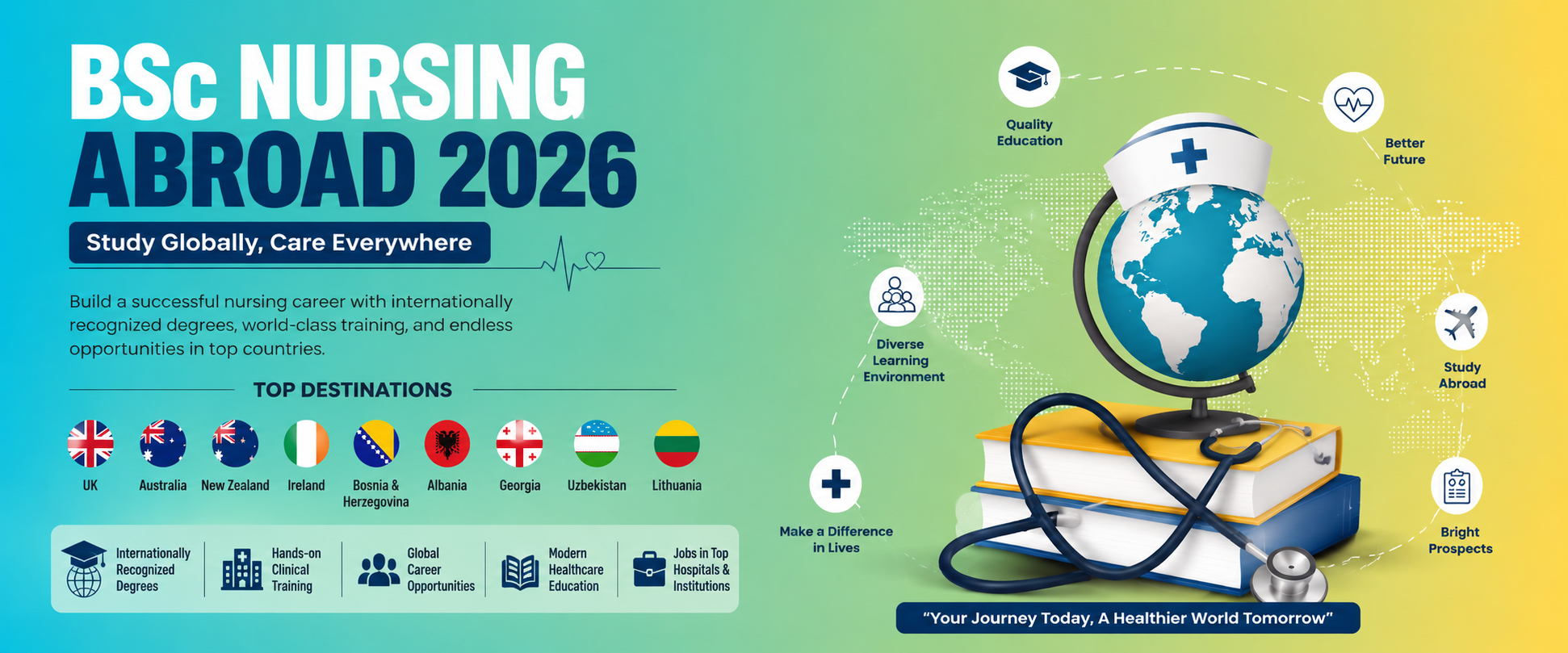
Nursing has emerged as one of the most respected and rewarding professions worldwide. As healthcare systems continue to expand and populations age, the demand for qualified nursing professionals is growing rapidly across many countries. For students who aspire to build an international healthcare career, pursuing a BSc Nursing Abroad in 2026 can provide access to high-quality education, advanced clinical training, global exposure, and excellent employment opportunities.
Studying nursing abroad allows students to learn from modern healthcare systems, gain practical experience in diverse clinical settings, and develop skills that are recognized internationally. Countries such as the United Kingdom, Australia, New Zealand, Ireland, Bosnia and Herzegovina, Albania, Georgia, Uzbekistan, and Lithuania have become popular destinations for nursing education due to their academic standards, healthcare infrastructure, and increasing opportunities for international students.
This guide provides a detailed overview of nursing education in these countries, including eligibility requirements, admission procedures, advantages of studying abroad, career opportunities, and future prospects for nursing graduates in 2026.
Why Choose BSc Nursing Abroad in 2026?
Healthcare remains one of the fastest-growing sectors globally. Hospitals, healthcare organizations, rehabilitation centers, and community health institutions continue to require qualified nurses who can provide quality patient care and support medical teams.
Studying nursing abroad offers several advantages, including:
- Exposure to international healthcare practices
- Access to modern clinical training environments
- Development of practical and professional nursing skills
- Opportunities to interact with multicultural patient populations
- Enhanced career opportunities worldwide
- Better understanding of global healthcare systems
- Opportunities for higher education and specialization
- Increased employability in international healthcare settings
As healthcare becomes increasingly interconnected, employers value professionals who have international educational experience and the ability to adapt to diverse working environments.
BSc Nursing in the United Kingdom
The United Kingdom remains one of the most sought-after destinations for nursing education. The country is known for its structured healthcare system and emphasis on evidence-based nursing practice. Nursing programs in the UK focus on combining theoretical knowledge with extensive clinical training, ensuring students develop both academic and practical competencies.
Students gain exposure to various areas of healthcare, including adult nursing, mental health nursing, children's nursing, and community healthcare. Clinical placements form a major component of nursing education and allow students to work in real healthcare settings under professional supervision.
Graduates who meet the required professional standards can pursue registration and employment opportunities within healthcare institutions across the country.
BSc Nursing in Australia
Australia has established itself as a leading destination for healthcare education. Nursing programs in Australia emphasize patient-centered care, clinical competence, and professional development.
Students benefit from hands-on learning experiences in hospitals, community healthcare facilities, and specialized medical centers. Australian nursing education encourages critical thinking, leadership, communication skills, and ethical healthcare practices.
The country's healthcare sector continues to experience demand for qualified nurses across urban and regional areas. Graduates often find opportunities in hospitals, aged-care facilities, emergency care settings, and community health services.
BSc Nursing in New Zealand
New Zealand offers a supportive and innovative environment for nursing education. Nursing programs focus on holistic healthcare, cultural awareness, and patient-centered treatment approaches.
Students receive extensive clinical training while learning about public health, primary healthcare, and specialized nursing practices. The healthcare system emphasizes quality care, preventive health measures, and community engagement.
Nursing graduates in New Zealand develop strong practical skills and are prepared to work in a variety of healthcare environments, including hospitals, community clinics, rehabilitation centers, and mental health facilities.
BSc Nursing in Ireland
Ireland has become an increasingly popular destination for international nursing students due to its modern healthcare system and growing demand for healthcare professionals.
Nursing education in Ireland combines classroom learning with supervised clinical practice. Students are trained in healthcare assessment, patient care management, healthcare ethics, and communication skills.
The country's healthcare sector continues to expand, creating opportunities for nursing graduates in public and private healthcare institutions. Nursing professionals play a crucial role in supporting healthcare delivery across hospitals, long-term care facilities, and community healthcare services.
BSc Nursing in Bosnia and Herzegovina
Bosnia and Herzegovina is gradually attracting international students seeking quality healthcare education in a European setting. Nursing programs emphasize both theoretical instruction and practical clinical experience.
Students learn about patient care, healthcare management, disease prevention, and nursing ethics. Clinical training enables students to apply classroom knowledge in healthcare environments and gain confidence in professional practice.
The country's growing healthcare sector and increasing international academic collaborations make it an emerging destination for nursing studies.
BSc Nursing in Albania
Albania has witnessed significant development in higher education and healthcare training in recent years. Nursing programs focus on developing practical skills, clinical competence, and professional responsibility.
Students receive education in anatomy, physiology, pharmacology, patient care, healthcare communication, and public health. Clinical experiences help students understand healthcare delivery systems and patient management practices.
The country continues to strengthen its healthcare education framework, creating opportunities for both domestic and international nursing students.
BSc Nursing in Georgia
Georgia has become a recognized destination for international students interested in healthcare-related programs. Nursing education in the country combines modern teaching methodologies with practical healthcare training.
Students are introduced to core nursing concepts, healthcare ethics, patient safety, and clinical procedures. Practical training plays a significant role in helping students develop the skills necessary for professional healthcare practice.
The country's educational reforms and growing international student community have contributed to its popularity among healthcare aspirants.
BSc Nursing in Uzbekistan
Uzbekistan is increasingly focusing on the development of healthcare education and medical training. Nursing programs aim to prepare students for professional healthcare roles through comprehensive academic and clinical instruction.
Students study healthcare sciences, patient care techniques, disease management, and healthcare communication. Clinical placements provide opportunities to apply theoretical knowledge in real-world healthcare settings.
The country's ongoing investments in healthcare infrastructure and education are creating new opportunities for future nursing professionals.
BSc Nursing in Lithuania
Lithuania has emerged as a preferred destination for students seeking healthcare education within Europe. Nursing programs are designed to meet modern healthcare standards and emphasize practical learning.
Students receive training in patient care, healthcare management, clinical decision-making, and public health. Clinical practice allows them to gain valuable experience in healthcare facilities and interact with patients under professional supervision.
Lithuania's healthcare education system focuses on preparing graduates to meet the challenges of contemporary healthcare environments while promoting professional growth and lifelong learning.
Eligibility Criteria for BSc Nursing Abroad 2026
Although admission requirements vary among institutions and countries, several common eligibility criteria apply to most nursing programs abroad.
Applicants generally need to have completed higher secondary education with a science background. Subjects such as Biology, Chemistry, and Physics are often preferred because they provide the foundational knowledge required for nursing studies.
Many institutions also assess applicants based on academic performance, communication skills, and English language proficiency. Since nursing involves direct interaction with patients and healthcare professionals, strong communication abilities are considered essential.
Additional requirements may include:
- Valid passport
- Academic transcripts
- Statement of Purpose (SOP)
- Letters of recommendation
- Medical fitness documentation
- Background verification documents
- Language proficiency test scores where applicable
Students should carefully review the admission requirements of their chosen institution before applying.
Skills Required for a Successful Nursing Career
Nursing is a profession that requires both technical expertise and personal qualities. Successful nurses possess a combination of clinical knowledge, communication skills, and emotional intelligence.
Important skills include:
- Compassion and empathy
- Communication abilities
- Critical thinking
- Problem-solving skills
- Attention to detail
- Teamwork and collaboration
- Leadership qualities
- Adaptability
- Time management
- Professional ethics
Developing these skills during nursing education can help students succeed in both academic and professional environments.
Career Opportunities After BSc Nursing Abroad
Graduates of international nursing programs have access to a wide range of career opportunities in healthcare settings worldwide.
Potential employment sectors include:
- Hospitals
- Community healthcare centers
- Primary healthcare facilities
- Rehabilitation centers
- Mental health institutions
- Emergency care units
- Pediatric care centers
- Geriatric healthcare facilities
- Public health organizations
- Research institutions
- Educational institutions
Depending on qualifications, licensing requirements, and experience, nursing graduates can pursue various specialized roles within the healthcare sector.
Higher Education Opportunities After BSc Nursing
Many graduates choose to continue their education through advanced nursing and healthcare programs. Higher education options may include:
- Master of Science in Nursing (MSc Nursing)
- Public Health Programs
- Healthcare Administration
- Nursing Education
- Clinical Specializations
- Advanced Practice Nursing
- Healthcare Management
- Research-Based Programs
Specialized education can enhance career prospects and open doors to leadership and advanced clinical positions.
Future Scope of Nursing in 2026 and Beyond
The future of nursing remains highly promising. Global healthcare systems are expanding, populations are aging, and medical advancements are creating new demands for qualified healthcare professionals.
Several factors are contributing to the increasing demand for nurses:
- Growing healthcare needs worldwide
- Expansion of healthcare facilities
- Increased focus on preventive healthcare
- Rising demand for elderly care services
- Advancements in medical technology
- Greater emphasis on community healthcare
Healthcare organizations across many countries continue to recruit skilled nursing professionals, making nursing one of the most stable and future-oriented career choices.
Conclusion
Pursuing a BSc Nursing Abroad in 2026 offers students an excellent opportunity to gain internationally recognized healthcare education, practical clinical experience, and exposure to diverse healthcare systems. Countries such as the United Kingdom, Australia, New Zealand, Ireland, Bosnia and Herzegovina, Albania, Georgia, Uzbekistan, and Lithuania provide unique learning environments that help students develop the knowledge, skills, and professional competencies required for successful nursing careers.
With increasing global demand for healthcare professionals, nursing graduates are well-positioned to pursue rewarding careers in hospitals, community healthcare organizations, research institutions, and public health sectors. By choosing the right destination and preparing thoroughly for admission, students can build a strong foundation for a fulfilling and impactful career in healthcare while contributing to the well-being of communities around the world.