


The Rise of Generative AI in Education: Transforming Modern Learning
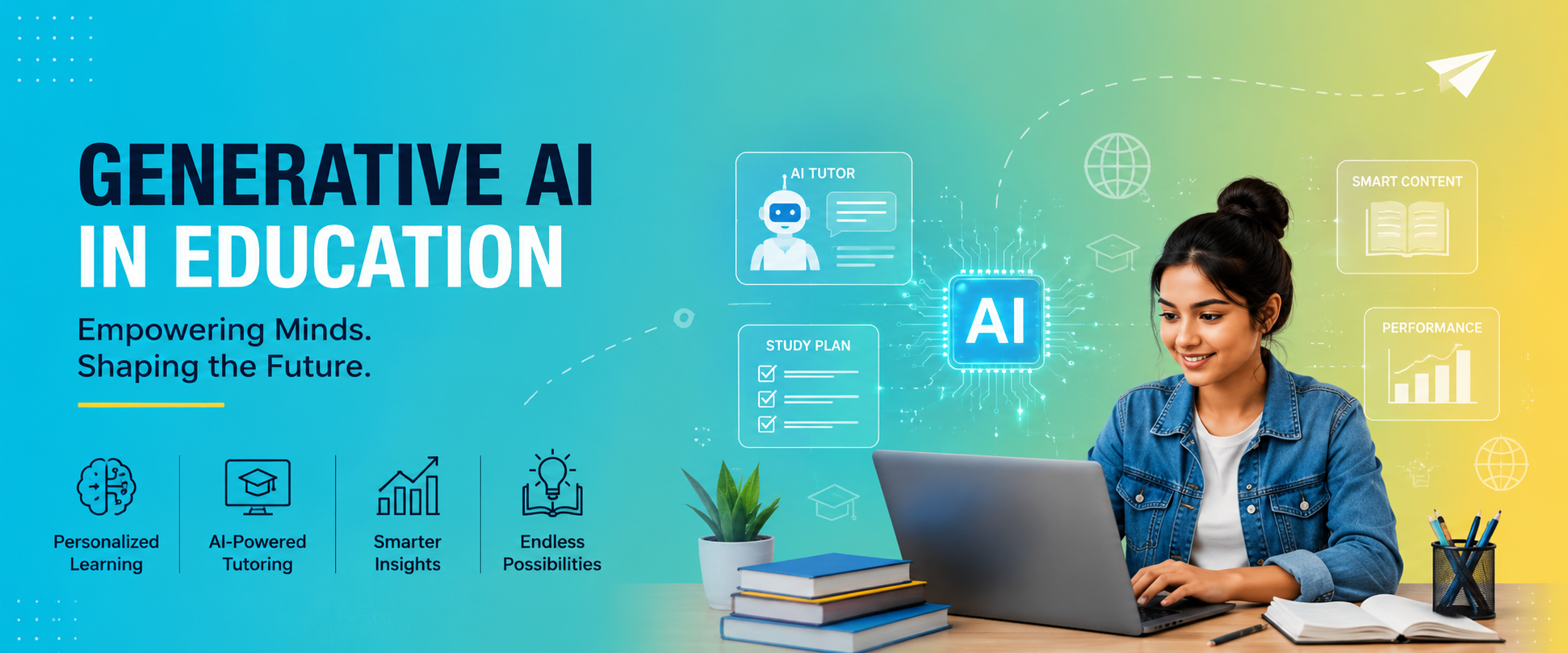
Artificial Intelligence (AI) is rapidly transforming every sector, and education is one of the biggest beneficiaries of this technological revolution. From personalized learning experiences to automated lesson planning, Generative AI is reshaping the way students learn and teachers teach. Educational institutions worldwide, including Indian universities and global learning platforms, are integrating AI tools to improve academic experiences, increase accessibility, and prepare students for a digital future.
Students from different countries, including African students pursuing higher education opportunities in India, are increasingly using AI-powered platforms for learning, communication, research, and skill development. As educational systems evolve, Generative AI is becoming an essential academic assistant that supports both educators and learners.
This article explores how Generative AI is revolutionizing education, its benefits, real-world applications, challenges, ethical concerns, and the future of AI-powered learning.
What is Generative AI?
Generative AI refers to artificial intelligence systems capable of creating new content such as text, images, audio, quizzes, assignments, lesson plans, and even educational simulations. These systems are trained on massive datasets including books, research papers, websites, articles, and academic resources.
Unlike traditional software, Generative AI understands patterns and produces human-like responses and content. Popular AI tools can perform tasks such as:
- Essay writing
- Text summarization
- Question paper generation
- Language translation
- Caption creation
- Interactive tutoring
- Educational game development
- Research assistance
These tools are increasingly becoming part of classrooms, online learning platforms, and university systems.
How Generative AI is Transforming Education
1. Personalized Learning Experiences
One of the biggest advantages of Generative AI is personalization. Every student learns differently, and AI systems can adapt educational content according to individual learning speed, strengths, weaknesses, and interests.
AI algorithms analyze student performance and create customized learning paths. For example:
- Students struggling with mathematics can receive simplified explanations and additional practice exercises.
- Advanced learners can access more challenging materials.
- Visual learners can receive interactive graphics and simulations.
This personalized approach helps students stay engaged and improves academic performance.
2. AI-Powered Tutoring Systems
Generative AI acts as a 24/7 virtual tutor. AI-based educational assistants such as Khanmigo, Gemini for Education, and Microsoft Copilot provide step-by-step guidance rather than simply giving direct answers.
These tools help students:
- Solve problems independently
- Practice languages conversationally
- Understand complex concepts
- Improve writing and communication skills
- Prepare for examinations
Students can interact with AI tutors anytime, making education more flexible and accessible.
3. Lesson Planning and Content Creation for Teachers
Teachers spend a significant amount of time creating lesson plans, worksheets, quizzes, and assignments. AI tools simplify these tasks by generating educational content instantly.
Platforms such as Eduaide.ai and Google Gemini help educators:
- Create curriculum-aligned lesson plans
- Generate assessment questions
- Develop interactive learning materials
- Prepare classroom activities
- Design educational games
This reduces teacher workload and allows educators to focus more on student engagement and mentoring.
4. Adaptive Learning and Instant Feedback
Adaptive learning systems powered by AI modify educational content in real time based on student progress.
For instance:
- If a student struggles with a topic, the AI system provides additional explanations and practice questions.
- Students receive instant feedback on assignments and quizzes.
- Teachers can monitor academic progress through AI-generated analytics.
This approach improves learning efficiency and ensures better academic outcomes.
5. Enhancing Accessibility and Inclusivity
Generative AI is helping make education more inclusive for students with disabilities and learning challenges.
AI-powered accessibility tools include:
- Real-time captions for hearing-impaired students
- Text-to-speech systems
- Language translation tools
- Simplified educational content
- Interactive learning support
These technologies ensure equal learning opportunities for all students regardless of their physical or educational limitations.
Real-World Applications of AI in Education
Educational institutions and governments across the world are actively investing in AI-driven learning systems.
Google Gemini for Education
Google’s Gemini AI integrates with Google Workspace to assist teachers in planning lessons, organizing classroom materials, and improving productivity.
Oak National Academy’s AI Assistant
The UK government funded Oak National Academy to develop “Aila,” an AI-powered lesson planning assistant that helps teachers create educational content efficiently.
Microsoft Copilot
Microsoft Copilot supports educators and students by generating learning resources, presentations, summaries, and educational documents.
AI Content Store Initiative
The UK Department for Science, Innovation and Technology launched a £3 million content store pilot to provide quality educational data for AI tools.
Benefits of Generative AI in Education
Improved Student Engagement
AI-powered interactive lessons, simulations, and gamified learning experiences make education more engaging and enjoyable.
Increased Creativity
Students can use AI for:
- Music creation
- Storytelling
- Research projects
- Presentation development
- Creative writing
AI encourages experimentation and innovation in learning.
Reduced Administrative Work
AI automates repetitive tasks such as:
- Attendance management
- Assignment grading
- Feedback generation
- Communication drafting
This improves institutional efficiency.
Data-Driven Educational Insights
AI analyzes student performance data and helps educators identify learning gaps, enabling targeted interventions and improved teaching strategies.
Challenges and Ethical Concerns of AI in Education
While Generative AI offers enormous opportunities, it also presents several challenges.
1. Data Privacy and Security
AI systems rely heavily on student data. Educational institutions must ensure proper safeguards to prevent data breaches and misuse of sensitive information.
Strong compliance with privacy laws such as GDPR and COPPA is essential.
2. Bias and Accuracy Issues
AI systems may sometimes produce biased or inaccurate information due to limitations in training data.
Human oversight remains necessary to verify educational content and ensure fairness.
3. The Digital Divide
Not all students have equal access to:
- Internet connectivity
- Digital devices
- AI-powered learning tools
Without proper infrastructure, AI could widen educational inequalities.
4. Overdependence on AI
Excessive reliance on AI tools may reduce students’ critical thinking and independent problem-solving abilities.
Students should learn how to use AI responsibly rather than depend entirely on it.
Essential Skills for the AI-Powered Future
As AI becomes deeply integrated into education, students must develop future-ready skills.
Critical Thinking
Students must learn to evaluate AI-generated information critically and solve complex problems independently.
Digital Literacy and AI Awareness
Understanding how AI systems work and using them responsibly is becoming an essential academic skill.
Creativity and Innovation
Human creativity remains irreplaceable. Educational institutions should encourage innovation alongside AI usage.
Lifelong Learning and Adaptability
The rapidly evolving digital world requires students to continuously update their knowledge and adapt to technological changes.
The Future of AI in Education
The future of education will likely involve deeper collaboration between humans and AI systems. Generative AI will not replace teachers but will act as a powerful assistant that enhances teaching efficiency and student learning experiences.
Future classrooms may include:
- AI-driven personalized curriculums
- Virtual reality learning environments
- Intelligent tutoring systems
- Automated assessments
- Real-time performance analytics
Governments, educators, policymakers, and technology companies must work together to ensure AI is used ethically, responsibly, and inclusively.
Generative AI is revolutionizing education by making learning more personalized, accessible, engaging, and efficient. From AI tutors and adaptive learning systems to automated lesson planning and inclusive educational tools, the technology is transforming traditional academic practices.
However, successful implementation requires careful attention to ethical considerations, data privacy, digital accessibility, and responsible AI usage. Educational institutions must ensure that AI supports human creativity, critical thinking, and equal learning opportunities.
As we move toward a technology-driven future, Generative AI will continue to play a major role in shaping modern education and preparing students for the evolving global workforce.