


How to Choose the Right College and Course After 12th in India: A Complete Career Guide for 2026
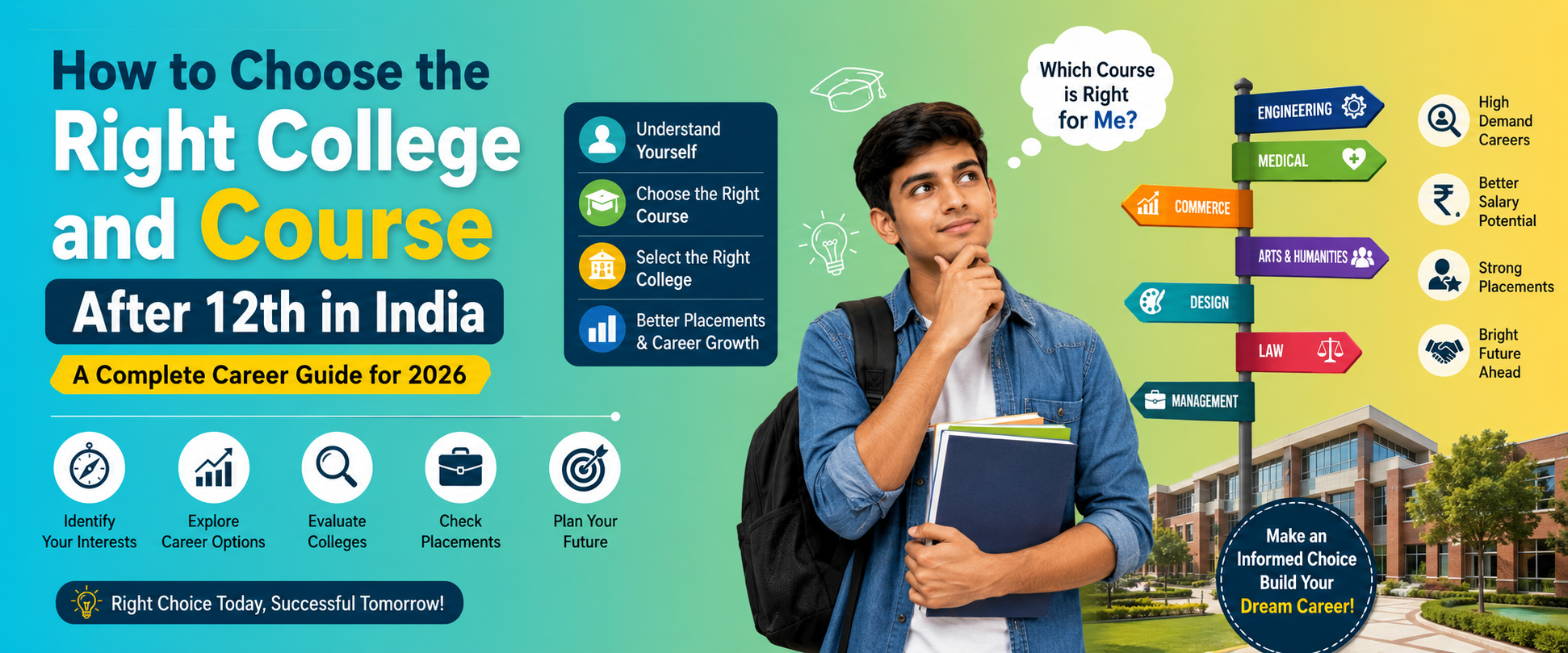
Completing Class 12 is a major milestone in every student's academic journey. While the board exam results are important, the decisions made afterward can have an even greater impact on a student's future. One of the most common questions students face is: "Which course should I choose after 12th?" Equally important is selecting the right college that can provide quality education, practical exposure, and strong career opportunities.
With thousands of colleges and hundreds of courses available across India, making the right choice can feel overwhelming. Whether you come from Science, Commerce, or Arts/Humanities, understanding your interests, evaluating career opportunities, and researching institutions carefully can help you make a confident and informed decision.
Why Career Guidance After 12th Is Important
Many students choose courses based on family expectations, peer influence, or trending career options without fully understanding whether the field aligns with their strengths and interests. This often leads to dissatisfaction, poor academic performance, and career confusion later in life.
Proper career guidance helps students:
- Identify their interests and strengths
- Understand available career opportunities
- Make informed academic decisions
- Avoid costly mistakes
- Build confidence in their career path
- Align education with future job market demands
The right guidance ensures that students select a course not just for today but for long-term career growth and personal satisfaction.
Step 1: Understand Yourself Before Choosing a Course
The first and most important step is self-assessment.
Identify Your Interests
Ask yourself:
- Which subjects do you genuinely enjoy studying?
- What topics do you read about in your free time?
- What activities excite you the most?
Choosing a course based solely on marks can be misleading. A student who loves Biology may struggle in an Engineering program, while someone passionate about communication may thrive in Journalism or Law.
Evaluate Your Strengths
Consider your natural abilities:
- Analytical thinking
- Problem-solving
- Creativity
- Communication skills
- Leadership abilities
- Technical aptitude
Understanding your strengths can help you identify courses that match your personality and capabilities.
Define Your Career Goals
Think about where you see yourself in the future.
Ask questions such as:
- What kind of work environment do I prefer?
- Do I want a corporate career, healthcare profession, government job, or entrepreneurial path?
- Am I interested in research, management, technology, or creative fields?
Having clarity about your long-term goals can simplify your course selection process.
Step 2: Explore Career Options Based on Your Stream
Your stream provides several pathways, but it does not necessarily limit your choices.
Science Stream (PCM)
Students with Physics, Chemistry, and Mathematics can pursue:
- B.Tech / Engineering
- Computer Science
- Artificial Intelligence & Machine Learning
- Architecture
- Data Science
- Aviation
- BCA
- Economics
- Design Programs
- Management Courses
Science Stream (PCB)
Students with Biology can explore:
- MBBS
- BDS
- Nursing
- Pharmacy
- Physiotherapy
- Biotechnology
- Nutrition & Dietetics
- Medical Laboratory Technology
- Allied Health Sciences
- Forensic Science
Commerce Stream
Commerce students have excellent opportunities in:
- B.Com
- BBA
- Chartered Accountancy (CA)
- Company Secretary (CS)
- Cost Management Accounting (CMA)
- Business Analytics
- Finance
- Banking
- Economics
- Entrepreneurship
Arts and Humanities Stream
Arts students can choose from:
- BA Programs
- Law (BA LLB)
- Journalism and Mass Communication
- Psychology
- Social Work
- Public Administration
- Fashion Design
- Interior Design
- Hotel Management
- Civil Services Preparation
The notion that Arts offers fewer career opportunities is outdated. Many successful professionals in media, law, psychology, and administration come from Humanities backgrounds.
Step 3: Evaluate Career Scope and Industry Demand
Selecting a course should involve understanding the future job market.
Research Industry Trends
Several industries are witnessing rapid growth:
- Artificial Intelligence
- Data Science
- Cybersecurity
- Healthcare
- Digital Marketing
- Business Analytics
- Financial Technology (FinTech)
- Renewable Energy
- Logistics and Supply Chain Management
Courses aligned with emerging industries often provide better employment opportunities and career progression.
Understand Salary Potential
Research:
- Entry-level salaries
- Career growth prospects
- Industry demand
- Skills required for advancement
While salary should not be the only deciding factor, understanding the return on investment (ROI) of a course is important.
Check Skill Relevance
Modern employers value practical skills as much as academic qualifications. Look for programs that offer:
- Industry certifications
- Internships
- Project-based learning
- Technical training
- Soft skill development
Step 4: Choose the Right College
Selecting the right college is just as important as choosing the right course.
1. Accreditation and Recognition
Always verify:
- UGC Approval
- AICTE Approval (if applicable)
- NAAC Accreditation
- Professional Council Recognition
Recognized institutions ensure quality education and better career opportunities.
2. Faculty Quality
Good faculty members provide:
- Strong academic guidance
- Industry insights
- Research opportunities
- Mentorship support
Look for institutions where professors possess both academic qualifications and industry experience.
3. Curriculum Relevance
A modern curriculum should include:
- Industry-oriented subjects
- Emerging technologies
- Practical applications
- Internship opportunities
Avoid colleges with outdated syllabi that fail to meet current industry requirements.
4. Practical Exposure
Employers increasingly seek graduates with hands-on experience.
Check whether the college offers:
- Laboratories
- Workshops
- Industry visits
- Clinical training
- Live projects
- Internships
Practical learning significantly improves employability.
Step 5: Analyze Placement Records Carefully
Placement statistics are often heavily advertised, but students should look beyond the highest salary package.
Focus on:
- Average salary package
- Median salary package
- Placement percentage
- Types of recruiters
- Job roles offered
A college with strong average placements generally indicates consistent career outcomes for students.
Questions to Ask
- What percentage of students get placed?
- Which companies recruit regularly?
- What are the average salary packages?
- How many students pursue higher studies?
These factors provide a more realistic picture than promotional advertisements.
Step 6: Consider Location and Industry Exposure
The location of a college can influence your opportunities.
Institutions located near major cities often provide:
- Better internship access
- Corporate networking opportunities
- Industry events
- Guest lectures
- Startup ecosystems
Cities such as Bengaluru, Chennai, Hyderabad, Pune, Mumbai, and Delhi offer excellent exposure across multiple industries.
Step 7: Check Alumni Success
A strong alumni network can provide:
- Career guidance
- Internship referrals
- Placement support
- Industry connections
Research where former students are working and whether they have achieved notable success in their respective fields.
Common Mistakes Students Should Avoid
Following Peer Pressure
Your friends' choices may not align with your interests and strengths.
Choosing Based Only on Rankings
Rankings are useful but should not be the sole deciding factor. Consider faculty, placements, curriculum, and practical exposure as well.
Ignoring Future Trends
Industries evolve rapidly. Courses aligned with emerging sectors may offer better opportunities.
Overlooking Soft Skills
Communication, leadership, teamwork, and problem-solving skills are essential regardless of your chosen field.
Making Decisions in Panic
Take time to research thoroughly before finalizing your choice.
Final Checklist Before Selecting a Course and College
✔ Have I identified my interests and strengths?
✔ Do I understand the career opportunities available?
✔ Is the course aligned with future industry demand?
✔ Does the college have proper accreditation?
✔ Are placement records transparent?
✔ Does the institution offer practical learning opportunities?
✔ Is the financial investment reasonable?
✔ Have I spoken to students, alumni, or professionals?
✔ Does the college support overall personality development?
✔ Am I confident about my decision?
Conclusion
Choosing the right college and course after 12th is one of the most significant decisions in a student's life. The ideal choice balances personal interests, career opportunities, industry demand, and institutional quality. Instead of following trends or external pressure, focus on understanding yourself, exploring career options, and evaluating colleges thoroughly.
Remember, a successful career is not built by choosing the most popular course—it is built by choosing the course and college that best align with your aspirations, strengths, and long-term goals. By making an informed decision today, you can create a strong foundation for academic success, professional growth, and lifelong fulfillment.