


MS in Data Science in Australia 2026: Universities, Fees, Careers & Visa Guide
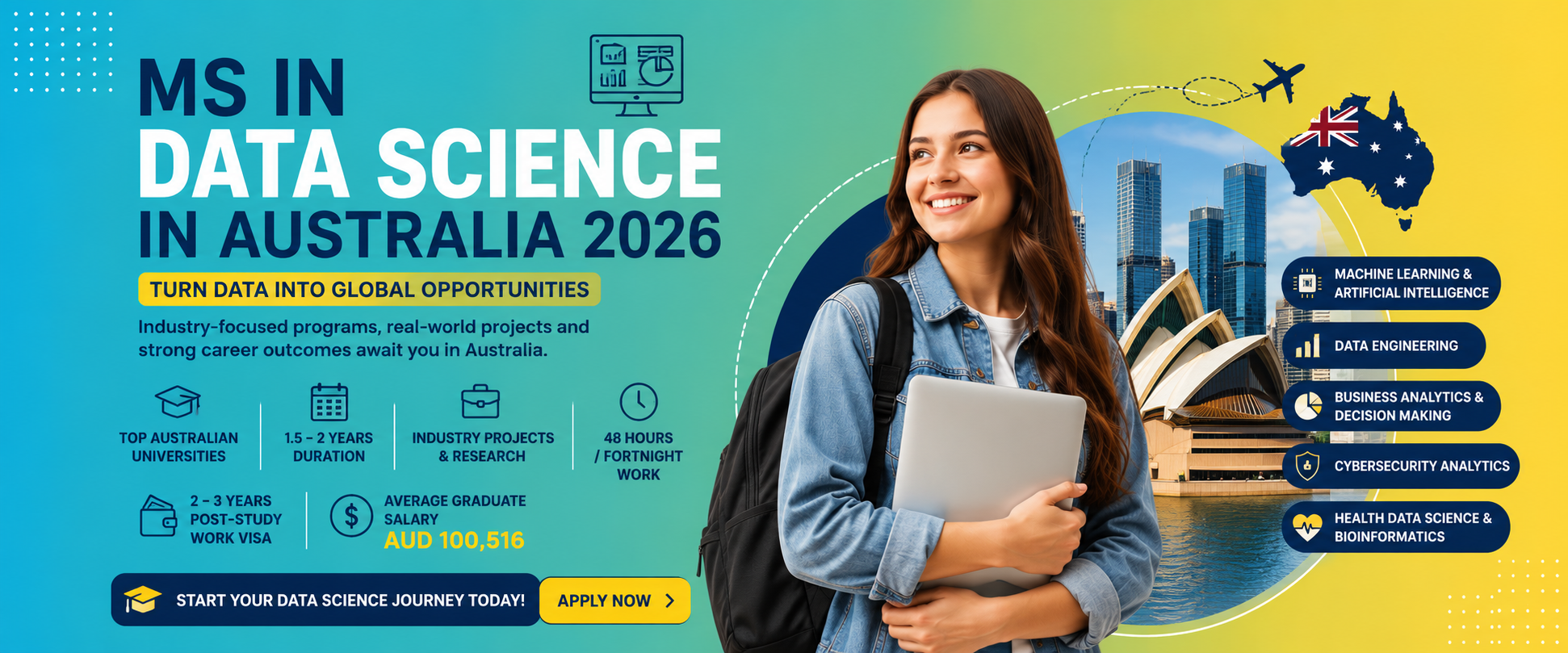
Australia has rapidly become one of the most preferred destinations for international students pursuing advanced education in technology and data-driven disciplines. As organizations across industries increasingly rely on big data, artificial intelligence, machine learning, and predictive analytics, the demand for skilled data professionals continues to grow at an unprecedented pace.
According to industry projections, Australia will require more than 1.3 million data and digital specialists by 2030, making it one of the strongest employment markets for graduates in Data Science and related fields. This increasing demand has encouraged Australian universities to redesign their master's programs with a strong focus on industry collaboration, research excellence, and practical learning.
Rather than relying solely on classroom instruction, universities integrate students into real-world projects through partnerships with government agencies, CSIRO research initiatives, technology companies, financial institutions, healthcare organizations, and multinational employers. This industry-oriented approach enables graduates to develop practical skills while building valuable professional networks.
If you're planning to pursue an MS in Data Science in Australia in 2026, this guide covers everything you need to know—from program highlights and specialization options to tuition fees, living costs, work opportunities, and future career prospects.
Why Choose Australia for an MS in Data Science?
Australia has established itself as a global leader in technology education by combining academic excellence with practical industry exposure. Universities focus heavily on employability, ensuring graduates possess both technical expertise and problem-solving skills required by employers.
The country's growing digital economy continues to create opportunities in sectors such as:
- Artificial Intelligence
- Machine Learning
- Data Engineering
- Business Analytics
- Cybersecurity
- Cloud Computing
- Healthcare Analytics
- Financial Technology
- Government Digital Services
- Research and Innovation
Students also benefit from multicultural campuses, internationally recognized qualifications, excellent research facilities, and strong post-study employment opportunities.
MS in Data Science in Australia 2026 Highlights
Below is a quick overview of the program.
| Aspect | Details |
|---|---|
| Course Type | Taught Master's |
| Duration | 1.5–2 Years |
| Tuition Fees | AUD 53,300–AUD 56,500 per year |
| Living Cost | AUD 29,710 per year |
| Part-Time Work | 48 hours per fortnight |
| Post-Study Work Visa | 2–3 Years |
| Average Graduate Salary | AUD 100,516 |
These figures demonstrate that although studying in Australia requires a significant investment, graduates enjoy excellent earning potential and career growth.
Popular Specializations
Australian universities offer several specialized streams to help students align their education with future industry demand.
Popular specializations include:
- Machine Learning & Artificial Intelligence
- Data Engineering
- Business Analytics & Data-Driven Decision Making
- Cybersecurity Analytics
- Health Data Science
- Bioinformatics
Each specialization equips students with technical knowledge, analytical thinking, and practical skills required for highly specialized careers.
Program Duration
Most universities offer the program as a Taught Master's, designed to be completed within:
1.5 to 2 years
The curriculum combines theoretical learning with practical projects, research assignments, internships, and industry collaboration.
Tuition Fees
The average annual tuition fee for international students ranges between:
AUD 53,300 – AUD 56,500
Tuition fees vary depending on the university, course structure, specialization, and location.
Although the cost may appear substantial, Australian qualifications are globally recognized and often provide excellent long-term returns through higher salaries and international career opportunities.
Cost of Living
Students should budget approximately:
AUD 29,710 per year
Living expenses generally include:
- Accommodation
- Food
- Transportation
- Utilities
- Health Insurance
- Study Materials
- Personal Expenses
The actual amount depends on the city, accommodation choice, and lifestyle.
Part-Time Work Opportunities
International students studying in Australia are permitted to work:
48 hours per fortnight
This allows students to gain practical experience while supporting their living expenses.
Many students secure part-time roles in:
- IT Support
- Data Analysis
- Customer Service
- University Research
- Retail
- Administration
- Software Development
These experiences often strengthen employability after graduation.
Post-Study Work Visa
One of Australia's biggest advantages is its generous post-study work rights.
Graduates completing a Master's degree may qualify for a:
2–3 Year Post-Study Work Visa
The exact duration depends on the qualification completed.
During this period, graduates can gain valuable Australian work experience, build professional networks, and pursue permanent employment opportunities.
Average Salary After Graduation
Graduates from Australian universities enjoy highly competitive salaries.
The average graduate salary is approximately:
AUD 100,516 per year
Professionals with experience and specialized technical skills can earn significantly more as they progress in their careers.
Industry Demand
Australia's digital transformation continues to accelerate across both public and private sectors.
Organizations actively recruit professionals skilled in:
- Artificial Intelligence
- Data Analytics
- Machine Learning
- Business Intelligence
- Cloud Computing
- Cybersecurity
- Predictive Analytics
- Big Data Engineering
Government agencies, healthcare providers, banks, consulting firms, and multinational corporations all require experienced data professionals.
With more than 1.3 million digital specialists expected to be required by 2030, graduates entering the workforce can benefit from strong employment demand and excellent career progression.
Practical Learning and Industry Collaboration
Unlike traditional master's programs that focus mainly on theory, Australian universities emphasize practical learning.
Students frequently participate in:
- Industry projects
- Research collaborations
- Capstone projects
- Case studies
- Professional internships
- Government-funded initiatives
- CSIRO research partnerships
These experiences help students develop job-ready skills before graduation.
Career Opportunities
An MS in Data Science opens doors to numerous high-paying careers across multiple industries.
Graduates commonly work as:
- Data Scientist
- Machine Learning Engineer
- AI Engineer
- Data Engineer
- Business Intelligence Developer
- Business Analyst
- Cybersecurity Analyst
- Cloud Data Engineer
- Bioinformatics Specialist
- Data Architect
These roles are available across technology companies, finance, healthcare, consulting, manufacturing, education, government, and research organizations.
Benefits of Studying MS in Data Science in Australia
Choosing Australia offers numerous advantages for international students.
Some of the major benefits include:
- Globally recognized universities
- Industry-focused curriculum
- Practical project-based learning
- Strong employer partnerships
- Excellent graduate employability
- High graduate salaries
- Research opportunities
- Generous post-study work rights
- Multicultural learning environment
- Growing technology sector
- Global networking opportunities
- Long-term career prospects
These advantages make Australia one of the most rewarding destinations for aspiring data professionals.
Who Should Choose This Course?
An MS in Data Science is ideal for students interested in:
- Mathematics
- Programming
- Artificial Intelligence
- Data Visualization
- Machine Learning
- Statistics
- Predictive Modeling
- Business Intelligence
- Research
- Technology Innovation
Professionals from computer science, engineering, mathematics, statistics, and related disciplines can particularly benefit from this program.
Conclusion
An MS in Data Science in Australia is far more than just a postgraduate qualification—it is a gateway to one of the world's fastest-growing career fields. Australia's industry-driven education system, world-class universities, practical learning opportunities, and strong employer partnerships ensure graduates are equipped with the skills needed to succeed in today's digital economy.
With growing demand for data professionals, competitive salaries, flexible post-study work opportunities, and internationally recognized qualifications, Australia remains one of the best destinations for international students seeking a successful career in data science. Whether your ambition is to become a data scientist, AI engineer, business analyst, cybersecurity specialist, or machine learning expert, pursuing an MS in Data Science in Australia in 2026 can be a valuable investment in your future.