


How to Become a Registered Nurse (RN) in India: Complete Career Guide 2026
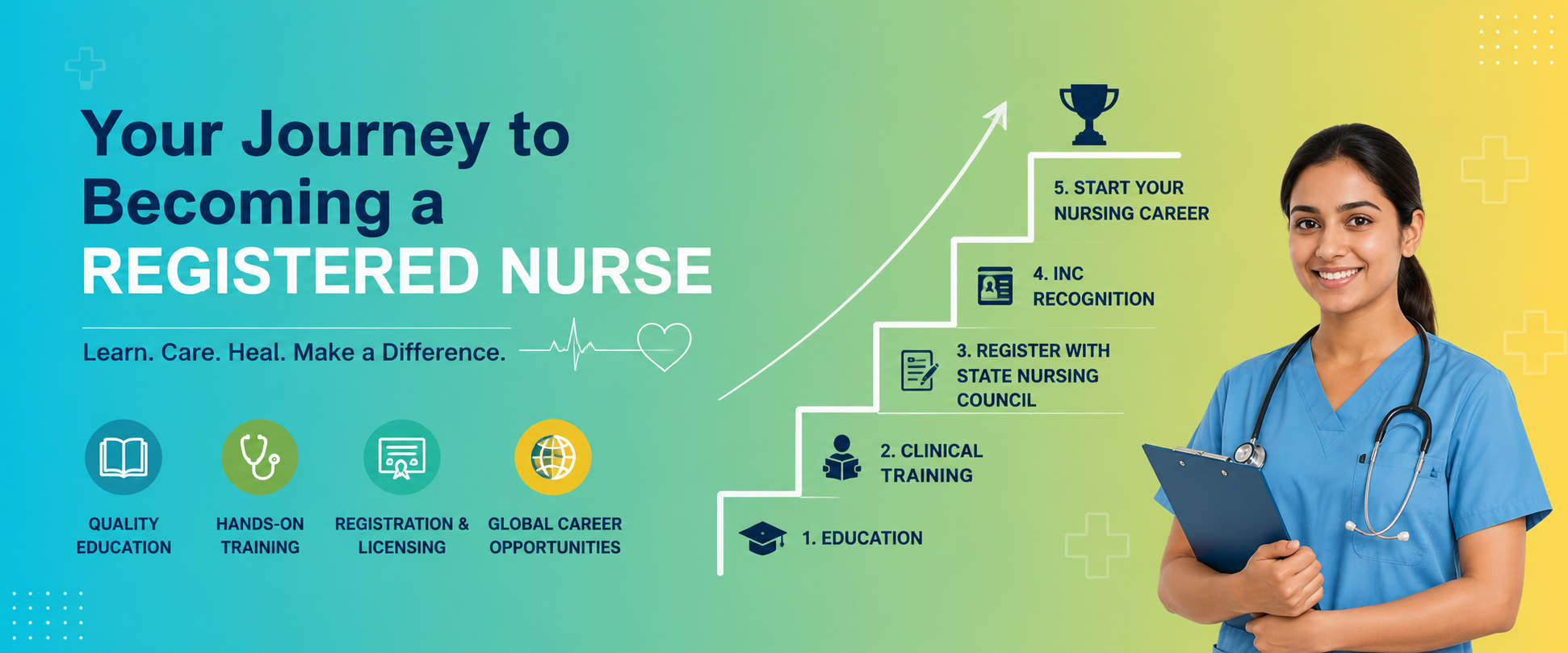
Nursing is one of the most respected and rewarding professions in the healthcare sector. Nurses play a vital role in patient care, disease prevention, health promotion, and recovery support. With the growing demand for qualified healthcare professionals across India and abroad, nursing has become a highly sought-after career offering stability, career advancement, and global opportunities.
A Registered Nurse (RN) is a licensed healthcare professional responsible for delivering direct patient care, assisting doctors during medical procedures, monitoring patient health, administering medications, and educating patients and their families. Becoming a Registered Nurse in India requires the right educational qualifications, practical training, and registration with the appropriate nursing councils.
This comprehensive guide explains everything you need to know about becoming a Registered Nurse in India in 2026, including eligibility requirements, nursing courses, registration procedures, career opportunities, salary expectations, and future growth prospects.
What is a Registered Nurse (RN)?
A Registered Nurse (RN) is a qualified healthcare professional trained to provide clinical care and support to patients in hospitals, clinics, nursing homes, rehabilitation centers, community healthcare facilities, and home care settings. Registered Nurses work alongside doctors, specialists, and other healthcare professionals to ensure quality patient care and successful treatment outcomes.
The profession combines scientific knowledge, clinical expertise, communication skills, and compassion. Nurses are often the primary point of contact for patients and play a significant role in improving healthcare experiences and outcomes.
Roles and Responsibilities of a Registered Nurse
Registered Nurses are responsible for a wide range of healthcare duties. Their responsibilities include assessing and monitoring patients' health conditions, recording vital signs, administering medications and treatments, developing nursing care plans, assisting doctors during procedures, and maintaining accurate medical records.
They also provide emotional support to patients and their families, educate individuals about health management and disease prevention, coordinate with healthcare teams, respond to emergencies, and ensure ethical and legal standards are followed in patient care. Nurses play an essential role in advocating for patient welfare while ensuring safe and effective treatment.
Step-by-Step Process to Become a Registered Nurse in India
Step 1: Complete Higher Secondary Education
The journey to becoming a Registered Nurse begins with completing 10+2 education in the Science stream with Physics, Chemistry, and Biology as core subjects. Most nursing colleges require candidates to secure a minimum of 45–50% aggregate marks in their higher secondary examinations.
A strong foundation in science helps students understand medical concepts and prepares them for professional nursing education.
Step 2: Enroll in a Recognized Nursing Course
After completing higher secondary education, students can choose from various nursing programs based on their career goals.
The most popular option is the Bachelor of Science in Nursing (B.Sc Nursing), a four-year undergraduate degree designed to prepare students for professional nursing practice. The program combines classroom learning with extensive clinical training.
Students may also choose General Nursing and Midwifery (GNM), a 3.5-year diploma program focused on nursing and midwifery practice. Another option is Auxiliary Nursing and Midwifery (ANM), which prepares candidates for community healthcare roles. GNM-qualified nurses can later pursue a Post Basic B.Sc Nursing program to enhance their qualifications.
It is essential to select a nursing institution recognized by the Indian Nursing Council (INC) and affiliated with a recognized university.
Step 3: Gain Clinical Training and Internship Experience
Practical training forms the backbone of nursing education. During the course, students undergo clinical postings and internships in hospitals, healthcare centers, and community settings.
Clinical training helps students develop skills in patient assessment, medication administration, emergency response, wound care, maternal and child health, critical care, and healthcare communication. Exposure to departments such as ICU, emergency medicine, operation theatres, pediatric wards, and maternity units provides valuable real-world experience.
Successful completion of both theoretical and practical examinations is mandatory for qualification as a nurse.
Step 4: Register with the State Nursing Council
After completing a recognized nursing program, graduates must register with their respective State Nursing Council to legally practice nursing in India.
The registration process generally requires submission of degree or diploma certificates, internship completion records, academic transcripts, identity proof, passport-size photographs, and applicable fees.
Upon successful verification, candidates receive a State Nursing Registration Number, officially recognizing them as Registered Nurses within the state.
Step 5: Obtain Recognition Through the Indian Nursing Council
Following state registration, the nurse's details are incorporated into the Indian Nursing Council's central registry. This step formalizes their professional status and allows them to practice nursing legally across India.
Nurses must ensure their registrations remain active and comply with renewal requirements prescribed by their respective State Nursing Councils.
Essential Skills Required for Nurses
Success in nursing requires a combination of technical expertise and interpersonal abilities. Important skills include active listening, effective communication, empathy, compassion, critical thinking, clinical judgment, teamwork, problem-solving, time management, and emotional resilience.
Nurses must be capable of making quick decisions, handling stressful situations, and maintaining professionalism while delivering patient-centered care. Strong interpersonal skills help build trust with patients and improve healthcare outcomes.
Building a Successful Nursing Career After Graduation
Completing a nursing qualification is only the beginning of a rewarding professional journey. Building a successful nursing career requires continuous learning, practical experience, and strategic career planning.
Fresh graduates should consider starting their careers in leading multi-specialty hospitals where they can gain exposure to advanced healthcare systems and diverse patient cases. Departments such as Intensive Care Units (ICU), Coronary Care Units (CCU), Emergency Medicine, and Critical Care offer excellent opportunities to strengthen clinical skills.
Job opportunities can be explored through hospital recruitment portals, job platforms like Naukri and Indeed, and government employment notifications.
Advanced Nursing Specializations
Specialization allows nurses to expand their expertise and improve career prospects. Popular nursing specializations include Critical Care Nursing, Oncology Nursing, Neonatal Nursing, Pediatric Nursing, Psychiatric Nursing, Dialysis Nursing, Emergency Nursing, Operation Theatre Nursing, and Community Health Nursing.
Many nurses pursue Post Basic Diplomas, M.Sc Nursing programs, Nurse Practitioner certifications, or doctoral studies to qualify for leadership, administrative, teaching, and research roles.
Advanced qualifications often lead to higher salaries and greater professional responsibilities.
Government Nursing Career Opportunities
Government nursing jobs remain highly attractive due to their job security, competitive salaries, and additional benefits. Nurses can prepare for recruitment examinations conducted by institutions such as AIIMS, ESIC, State Health Departments, Railways, and the Military Nursing Service (MNS).
Government positions often offer structured career progression, pension benefits, healthcare coverage, and opportunities for professional development.
Candidates should regularly monitor official recruitment portals and government job websites for examination notifications and application updates.
International Career Opportunities for Indian Nurses
Indian nurses are recognized globally for their clinical competence and professional training. Many countries actively recruit qualified nurses to address healthcare workforce shortages.
For employment in the United States, candidates must pass the NCLEX-RN examination and meet language proficiency requirements through IELTS or OET. Nurses seeking opportunities in the United Kingdom must complete NMC registration procedures and required competency assessments.
Countries in the Middle East, including the UAE, often require DHA, HAAD, or Prometric licensing examinations. Australia and Canada also offer attractive nursing opportunities, subject to credential evaluation and professional licensing requirements.
International nursing careers provide exposure to advanced healthcare systems, higher salaries, and valuable global experience.
Salary and Demand for Nurses in India
The demand for skilled nurses continues to grow due to expanding healthcare infrastructure, increased healthcare awareness, and population growth.
Fresh nursing graduates typically earn between ₹3 lakh and ₹4 lakh annually, depending on the employer and location. Experienced nurses, specialized professionals, and those working in reputed healthcare organizations can earn significantly higher salaries.
Nurses with advanced qualifications and international certifications often enjoy enhanced earning potential and broader career opportunities.
The profession offers excellent job security and long-term career stability, making it one of the most reliable healthcare careers today.
Best Nursing Colleges in India
Several institutions in India are renowned for their nursing education and clinical training facilities. Some of the top nursing colleges include All India Institute of Medical Sciences (AIIMS), Christian Medical College (CMC) Vellore, Armed Forces Medical College (AFMC) Pune, Jawaharlal Institute of Postgraduate Medical Education and Research (JIPMER), King George's Medical University (KGMU), Sri Ramachandra Institute of Higher Education and Research, Bharati Vidyapeeth University, and KLE University.
Students should choose institutions recognized by the Indian Nursing Council and known for their strong academic standards and clinical exposure.
Conclusion
Nursing is a noble and fulfilling profession that combines healthcare expertise with compassionate patient care. As healthcare systems continue to expand in India and worldwide, the demand for qualified Registered Nurses is expected to remain strong. By completing a recognized nursing program, obtaining the necessary registrations, gaining clinical experience, and pursuing advanced specializations, aspiring nurses can build successful and rewarding careers.
Whether your goal is to work in leading hospitals, secure a government nursing position, specialize in advanced healthcare fields, or explore international opportunities, nursing offers a pathway to professional growth, financial stability, and the opportunity to make a meaningful impact on people's lives.