


Are Online Degrees Valid for Government and Private Jobs in India? A Complete Guide
Introduction
The education landscape in India has undergone a significant transformation in recent years. Advances in technology, digital learning platforms, and changing workforce demands have made online education more accessible than ever before. Today, students can earn undergraduate and postgraduate degrees from recognized universities without attending a physical campus.
As online learning continues to grow, one question remains common among students and professionals: Are online degrees valid for government jobs and private-sector employment?
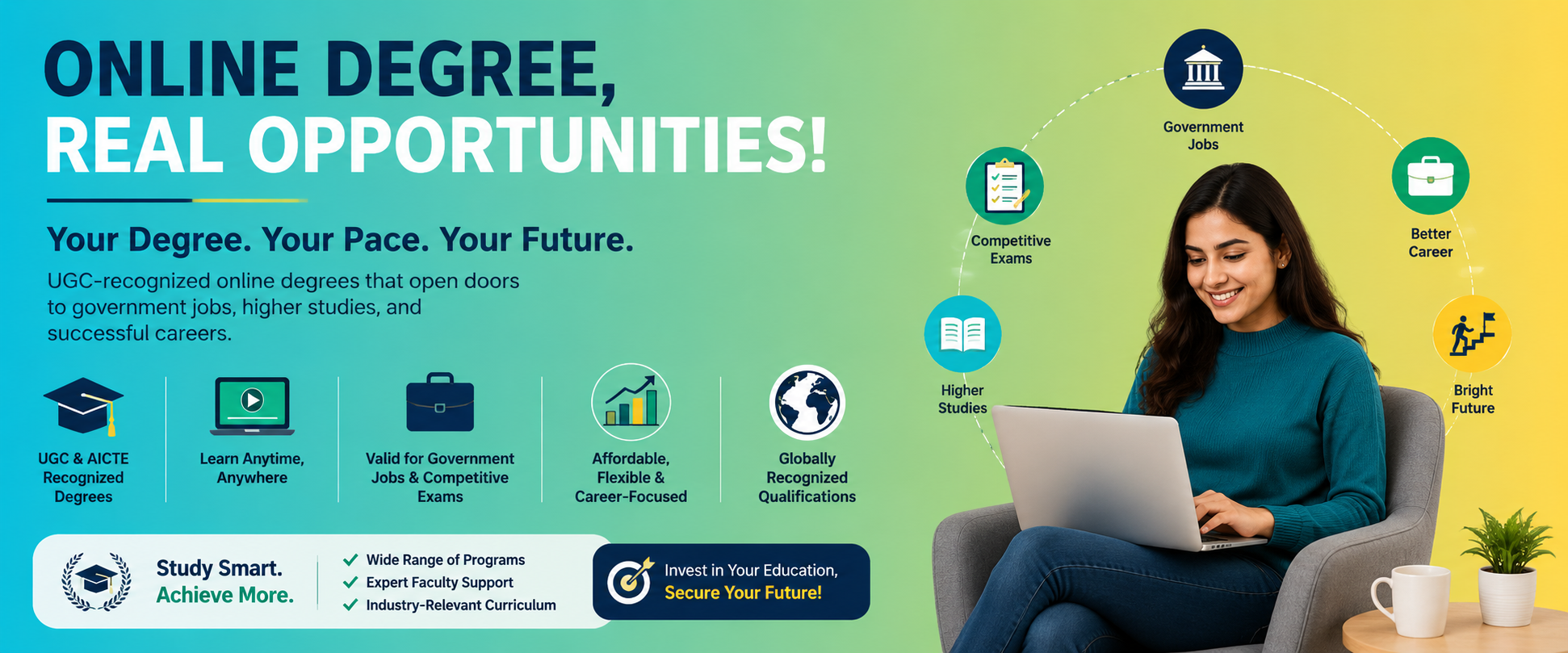
The answer is yes, provided the degree is obtained from a recognized and approved institution. Online degrees have gained widespread acceptance across industries and government sectors, making them an attractive option for individuals seeking flexible learning opportunities.
This guide explores the validity, recognition, career prospects, benefits, and limitations of online degrees in India.
What Is an Online Degree?
An online degree is a qualification earned through digital learning platforms where lectures, assignments, examinations, and study materials are delivered virtually. Students can complete coursework remotely without attending regular classroom sessions.
Online degree programs are designed to offer the same curriculum, learning outcomes, and academic standards as traditional classroom-based programs. The primary advantage is flexibility, allowing learners to study from anywhere while managing work, family, or other commitments.
Popular online degree programs include:
- Online MBA
- Online MCA
- Online BBA
- Online BCA
- Online M.Com
- Online B.Com
- Online MA
- Online MSc
These programs are increasingly being offered by accredited universities across India and internationally.
Are Online Degrees Valid in India?
Yes, online degrees are valid in India when awarded by universities approved by the appropriate regulatory authorities.
The University Grants Commission (UGC) permits recognized universities to offer online degree programs under specific guidelines. Students must ensure that the institution offering the program is authorized to provide online education.
A valid online degree generally requires:
- UGC Recognition
- Distance Education Bureau (DEB) approval where applicable
- AICTE approval for technical and management programs
- Compliance with higher education regulations
According to UGC regulations, online degrees from recognized institutions are treated as equivalent to traditional degrees for higher education and employment purposes.
Are Online Degrees Valid for Government Jobs?
One of the biggest concerns among students is whether online degrees are accepted for government employment.
The good news is that recognized online degrees are generally accepted for government jobs in India.
Government recruitment agencies primarily focus on whether the degree is awarded by a recognized university. The mode of learning—online, distance, or regular—is usually not a disqualifying factor if the institution meets regulatory standards.
Government Job Eligibility
Candidates with recognized online degrees can apply for various government positions, including:
- Central Government Jobs
- State Government Jobs
- Public Sector Undertakings (PSUs)
- Administrative Services
- Banking Jobs
- Railway Jobs
- Teaching Positions
- Defence Services
However, candidates should always verify the eligibility criteria specified in individual recruitment notifications.
Competitive Exams Accepted with Online Degrees
Online degree holders can generally appear for several prestigious competitive examinations.
UPSC Civil Services Examination
Candidates possessing a bachelor's degree from a recognized university are eligible for UPSC examinations, including:
- IAS
- IPS
- IFS
- IRS
SSC Examinations
Online graduates can apply for:
- SSC CGL
- SSC CHSL
- SSC MTS
- Other graduate-level examinations
Banking Examinations
Recognized online degrees are accepted for:
- IBPS PO
- IBPS Clerk
- SBI PO
- SBI Clerk
- RBI Assistant
- RBI Grade B
Railway Recruitment Board (RRB)
Both technical and non-technical railway positions often accept recognized degree qualifications.
State Public Service Commission (PSC) Exams
Various state government administrative and officer-level positions are accessible to candidates with valid online degrees.
Teaching and Academic Careers
Graduates may also qualify for:
- UGC NET
- SET Examinations
- Teacher Eligibility Tests (TET)
- Lectureship Positions
Are Online Degrees Accepted in the Private Sector?
Private-sector acceptance of online degrees has increased significantly over the last decade.
Many organizations now recognize that online learning requires discipline, self-motivation, time management, and technological proficiency. These qualities are highly valued in today's workplace.
Why Employers Accept Online Degrees
Modern employers increasingly focus on:
- Practical skills
- Technical expertise
- Problem-solving abilities
- Communication skills
- Work experience
- Professional certifications
As a result, candidates with recognized online degrees and strong skill sets often compete successfully with traditional graduates.
Industries That Commonly Accept Online Degrees
Online graduates find opportunities in:
- Information Technology
- Software Development
- Marketing
- Finance
- Human Resources
- Business Administration
- Data Analytics
- E-commerce
- Customer Support
- Digital Marketing
The emphasis has shifted from the mode of education to the candidate's ability to perform effectively in the workplace.
Benefits of Pursuing an Online Degree
Flexibility
Students can learn at their own pace and schedule study sessions according to personal and professional commitments.
Cost-Effective Education
Online programs often reduce expenses associated with:
- Transportation
- Accommodation
- Campus fees
- Relocation
Work and Study Balance
Working professionals can continue earning while upgrading their qualifications.
Accessibility
Students from remote areas gain access to quality education without geographical limitations.
Career Advancement
Online degrees help professionals acquire advanced qualifications that can support promotions and career growth.
Preparation for Competitive Exams
Flexible schedules provide additional time for preparing for examinations such as UPSC, SSC, Banking, and PSC exams.
Limitations of Online Degrees
Although online education offers numerous advantages, there are certain limitations to consider.
Practical and Clinical Courses
Programs requiring intensive practical training may not be suitable for online delivery.
Examples include:
- MBBS
- Nursing
- Certain Engineering Programs
- Clinical Healthcare Courses
Limited Networking Opportunities
Traditional campus environments often provide greater face-to-face interaction and networking opportunities.
Self-Discipline Required
Online learning demands strong time management and self-motivation.
Employer Preferences
Although acceptance is increasing, some employers may still prefer candidates with traditional classroom education for specific positions.
Factors to Consider Before Choosing an Online Degree
Verify University Recognition
Always check whether the institution is:
- UGC Approved
- DEB Recognized
- AICTE Approved (where applicable)
Review Career Goals
Choose a program aligned with your long-term career aspirations.
Check Industry Acceptance
Research whether your target industry widely accepts online qualifications.
Understand Course Requirements
Evaluate whether the course requires practical components that may be difficult to complete online.
Examine Placement Support
Many universities offer career counseling, placement assistance, and skill development services that can enhance employability.
Future of Online Education in India
The future of online education looks highly promising. Government initiatives, digital infrastructure improvements, and increasing employer acceptance continue to strengthen the credibility of online learning.
As organizations embrace remote work and digital transformation, the value of online education is expected to grow further. Universities are also enhancing their online programs through advanced learning technologies, interactive platforms, virtual labs, and industry partnerships.
This evolution is making online degrees an increasingly attractive and practical option for students and professionals alike.
Conclusion
Online degrees have become a respected and valuable pathway to higher education in India. When obtained from recognized and accredited institutions, they are generally accepted for government jobs, competitive examinations, higher studies, and private-sector employment.
Candidates with valid online degrees can apply for major examinations such as UPSC, SSC, Banking, Railways, PSC, and teaching recruitment exams. At the same time, private employers increasingly value the flexibility, adaptability, and skills developed through online learning.
The key to maximizing the value of an online degree is choosing a recognized institution, selecting a relevant program, and continuously developing practical skills that align with industry requirements. With proper planning and commitment, an online degree can open doors to rewarding career opportunities in both the public and private sectors.