





Introduction
Studying abroad is an exciting opportunity that opens doors to world-class education, global career prospects, and personal growth. However, before beginning your academic journey, obtaining a student visa is one of the most important steps in the process. Every country has its own immigration policies, visa requirements, and documentation procedures, making it essential for students to understand the process well in advance.
Applying for a student visa can seem overwhelming, especially for first-time international students. From preparing documents to attending visa interviews, every stage requires careful planning and attention to detail. This comprehensive guide explains when to apply for your student visa, the application process, required documents, and how professional visa assistance can simplify the entire journey.
Why a Student Visa is Important
A student visa is an official document issued by the immigration authorities of your destination country that allows you to enter and study legally at an approved educational institution. Without a valid student visa, you cannot begin your academic program abroad.
Besides permitting entry into the country, a student visa may also allow eligible students to work part-time during their studies, travel within the country, and, in some destinations, apply for post-study work opportunities after graduation.
Obtaining the correct visa before your course begins is therefore essential for a smooth and stress-free study abroad experience.
When Should You Apply for Your Student Visa?
One of the most common questions students ask is when they should begin their visa application process.
In most countries, students can start applying for their student visa once they receive their Confirmation of Enrolment (COE) or official admission confirmation from a recognised university, college, or educational institution.
Although you can only begin the formal application after receiving your enrolment confirmation, it is always advisable to prepare your documents well in advance.
Visa processing times vary significantly depending on the country, application volume, seasonal demand, and individual circumstances. During peak admission periods, processing may take several weeks or even months.
Applying early provides several benefits:
- Reduces last-minute stress
- Allows enough time to submit additional documents if requested
- Prevents delays in travel planning
- Provides sufficient time for visa interviews or medical examinations
- Ensures you arrive before your course commencement date
Students should avoid waiting until the final weeks before their classes begin, as unexpected delays could affect their admission and travel plans.
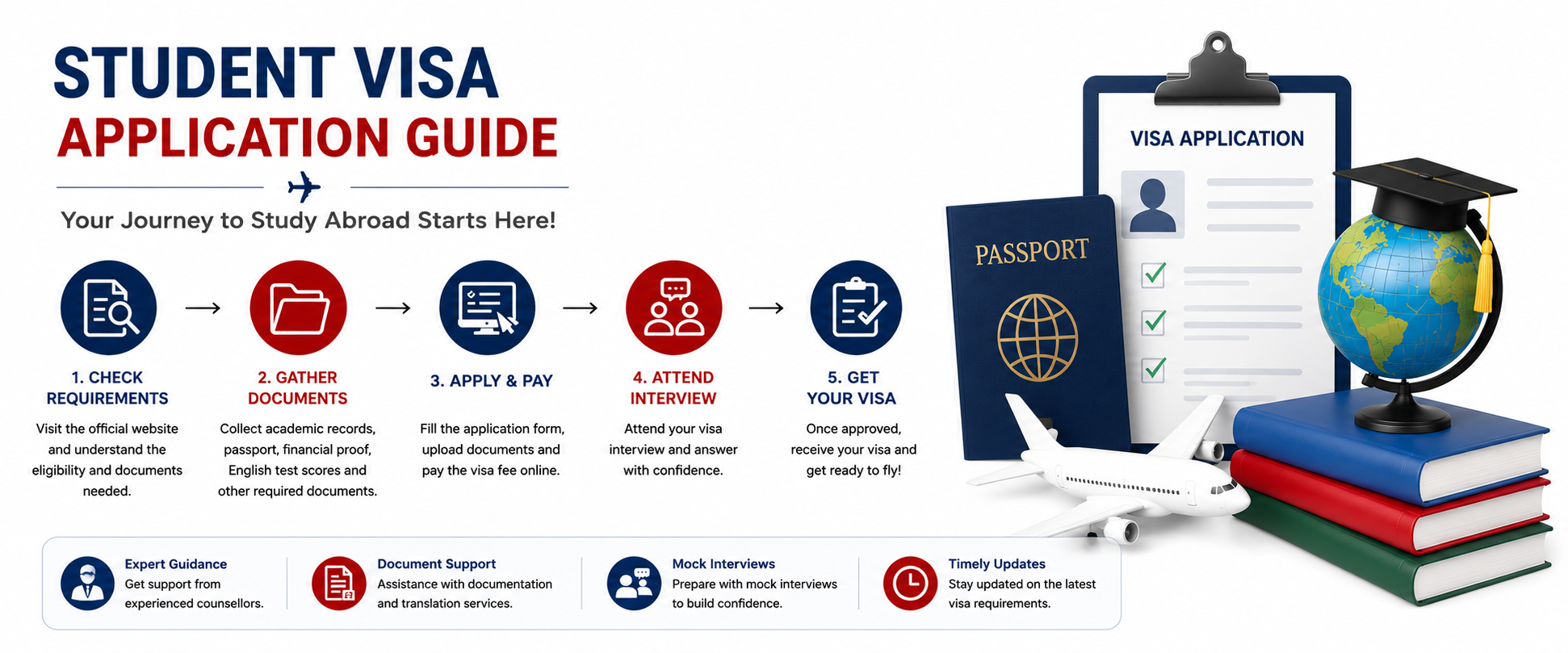
How to Apply for a Student Visa
Although visa procedures differ between countries, the general application process remains similar for most international destinations.
Step 1: Research the Visa Requirements
The first step is to visit the official immigration website of your chosen study destination and understand the latest student visa requirements.
You should carefully review:
- Eligibility criteria
- Required documents
- Financial requirements
- Health insurance policies
- Biometrics requirements
- Visa processing timelines
- Application fees
- Interview procedures
Since immigration policies are updated regularly, students should always refer to official government websites or seek professional guidance.
Step 2: Receive Confirmation of Enrolment
Before applying for your visa, you must secure admission to a recognised educational institution.
Most countries require one of the following:
- Confirmation of Enrolment (COE)
- Letter of Acceptance
- Admission Offer Letter
This document confirms that you have been officially admitted to your chosen course and institution.
Without this confirmation, your student visa application generally cannot proceed.
Step 3: Gather the Required Documents
Preparing accurate documentation is one of the most important parts of the visa process.
Students are commonly required to submit:
- Valid passport (usually valid for at least six months beyond your intended stay)
- Confirmation of Enrolment or Admission Letter
- Academic transcripts and certificates
- Passport-sized photographs
- English language test scores such as IELTS or TOEFL (if required)
- Proof of financial capacity
- Tuition fee payment receipts (if applicable)
- Health insurance documents (where required)
- Statement of Purpose or Genuine Student Statement (depending on the country)
Financial proof is particularly important because immigration authorities must be satisfied that you can cover:
- Tuition fees
- Living expenses
- Airfare
- Accommodation costs
- Expenses for accompanying family members, if applicable
Providing complete and genuine financial documentation improves the likelihood of visa approval.
English Language Requirements
Many countries require international students to demonstrate English language proficiency before granting a student visa.
Commonly accepted examinations include:
- IELTS
- TOEFL
- PTE Academic
- Other approved language proficiency tests
The minimum score requirement depends on your chosen university, course, and destination country.
Students should ensure that their language test results remain valid throughout the application process.
Medical Examination and Police Clearance
Some countries require applicants to complete health examinations before visa approval.
Medical tests are conducted at authorised medical centres approved by the destination country's immigration department.
Students may also need to provide:
- Police Clearance Certificate
- Criminal Background Verification
These requirements help immigration authorities assess the applicant's health and character before granting a visa.
Document Translation and Certification
If your academic documents are not in English, certified translations may be required.
Similarly, many countries require photocopies of important documents to be officially certified before submission.
Professional education consultants often assist students by arranging:
- Certified document translations
- Notarisation
- Document verification
- Courier services
- Secure submission of application documents
Proper documentation reduces the chances of application rejection due to technical errors.
Submit Your Student Visa Application
Once all documents are prepared, students can complete the official online or offline visa application form.
The application process generally includes:
- Filling out the application form
- Uploading supporting documents
- Paying visa processing fees
- Scheduling biometrics appointment
- Attending document verification (if required)
Applicants should carefully review all information before submission to avoid unnecessary delays.
Biometrics and Visa Processing Fees
Most countries require applicants to submit biometric information, including fingerprints and photographs.
Students must also pay the applicable visa processing fee.
The fee varies depending on:
- Country
- Visa category
- Processing priority
- Additional services
Payment receipts should be safely retained for future reference.
Preparing for the Student Visa Interview
Certain countries require applicants to attend a student visa interview.
The interview helps immigration officers understand:
- Why you selected the course
- Why you chose the university
- Your future career plans
- Your financial support
- Your intention to study genuinely
Professional visa assistance providers often conduct mock interviews to help students gain confidence and improve communication skills.
Mock interview sessions prepare students to answer questions clearly, confidently, and honestly.
Benefits of Professional Visa Assistance
Applying for a student visa independently can be complicated, especially when dealing with changing immigration regulations.
Professional visa consultants simplify the process by providing guidance at every stage.
Visa assistance generally includes:
- Document verification
- Application form filling
- Financial documentation support
- Translation services
- Visa fee guidance
- Appointment scheduling
- Courier assistance
- Mock visa interviews
- Latest immigration updates
- Pre-departure guidance
Their expertise helps students avoid common mistakes that may delay visa approval.
Stay Updated with Changing Visa Regulations
Student visa policies frequently change due to government decisions, immigration reforms, and international education policies.
Requirements related to:
- Financial evidence
- English language proficiency
- Medical examinations
- Visa validity
- Work rights
- Documentation
may change without prior notice.
Students should regularly check official immigration websites or consult trusted study abroad experts to ensure they are following the latest guidelines.
Final Thoughts
Obtaining a student visa is one of the most important milestones in your study abroad journey. Careful planning, early preparation, and accurate documentation significantly improve the chances of a successful visa application.
Students should begin preparing as soon as they receive their Confirmation of Enrolment from a recognised institution. Gathering all required documents, meeting financial and language requirements, completing medical and police checks where necessary, and preparing for visa interviews are essential steps toward approval.
Professional visa assistance can further simplify the process by offering expert guidance, document support, translation services, and interview preparation. With the right planning and timely application, students can focus on beginning their international education journey with confidence.