





Introduction
Studying abroad is an exciting opportunity that offers access to world-class education, international exposure, and better career prospects. However, one of the first challenges every international student faces is finding suitable accommodation. A comfortable, safe, and affordable place to live plays an important role in helping students settle into a new country and focus on their academic goals.
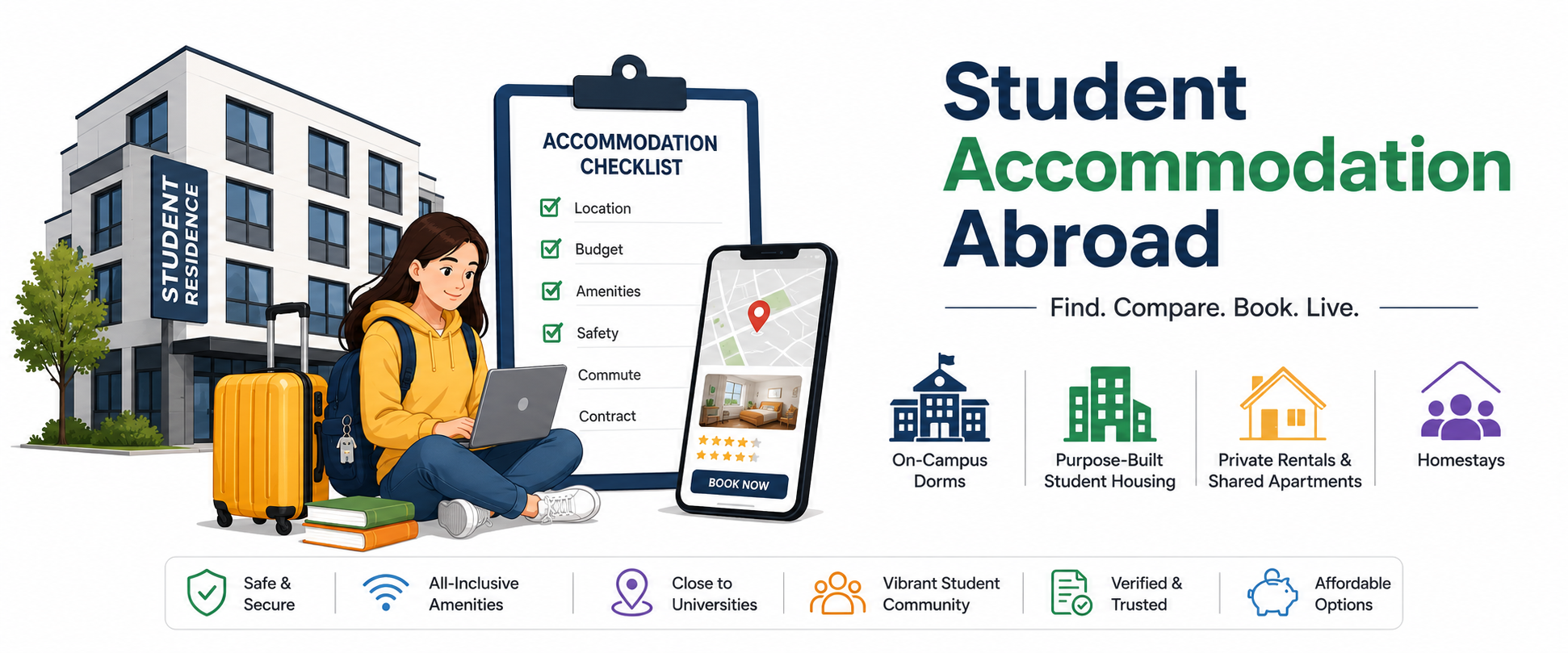
Student accommodation abroad includes various housing options such as university residences, purpose-built student accommodation (PBSA), private apartments, shared housing, and homestays. Each option offers different benefits depending on a student's budget, lifestyle, and personal preferences. Planning early and understanding the available choices can make the entire relocation process much smoother.
What is Student Accommodation Abroad?
Student accommodation abroad refers to housing specifically designed or commonly used by international students while studying in another country. These accommodations may be managed directly by universities or offered by private housing providers located near educational institutions.
The right accommodation not only provides a place to stay but also supports students with safety, convenience, social interaction, and access to essential facilities.
Why Choosing the Right Accommodation Matters
Accommodation affects almost every aspect of student life. Living close to campus reduces travel time, allows easy access to libraries and classrooms, and helps students participate in university activities.
A suitable living environment also contributes to better academic performance, improved mental well-being, and easier adjustment to a new culture. Therefore, accommodation should be considered as carefully as selecting a university or academic program.
Types of Student Accommodation Abroad
University Accommodation
University accommodation is managed by the institution and is usually located on or very close to campus.
Benefits
- Walking distance from classrooms
- Safe and secure environment
- Fully furnished rooms
- Utilities often included
- Easy access to university facilities
- Opportunity to meet students from different countries
Limitations
- Limited availability
- Must apply early
- University rules and regulations
- Less privacy
- Fixed accommodation options
University housing is especially recommended for first-year international students who are adjusting to a new country.
Purpose-Built Student Accommodation (PBSA)
Purpose-Built Student Accommodation is privately managed housing specifically designed for students.
These modern residences often provide:
- Fully furnished rooms
- Study areas
- High-speed internet
- Laundry facilities
- Fitness centres
- Common lounges
- Security services
- All-inclusive utility bills
PBSA offers an excellent balance between comfort, independence, and community living.
Private Rentals and Shared Apartments
Private accommodation gives students greater freedom and flexibility.
Students may choose:
- Studio apartments
- Shared apartments
- Independent flats
- Shared houses
Sharing accommodation with other students helps reduce rent and utility expenses while allowing greater independence.
However, students must carefully review rental agreements before making payments.
Homestay Accommodation
Homestays allow students to live with a local family during their studies.
This option often includes:
- Furnished bedroom
- Meals
- Internet
- Cultural interaction
- Family support
Homestays are ideal for students who want a supportive environment while learning about local traditions and improving language skills.
When Should Students Book Accommodation?
The accommodation search should begin immediately after receiving confirmation of university admission.
Many universities allocate housing on a first-come, first-served basis. Delaying applications may leave students with fewer choices and higher rental costs.
Experts recommend securing accommodation several months before the academic session begins to avoid last-minute stress.
Private Accommodation vs University Accommodation
University Accommodation
Advantages
- Close to campus
- Better security
- Ready-to-move facilities
- Student community
- Utility bills often included
Disadvantages
- Limited availability
- Less flexibility
- University regulations
- Higher competition
Private Accommodation
Advantages
- More location choices
- Greater independence
- Flexible lease options
- Potentially lower costs through shared housing
Disadvantages
- Hidden utility costs
- Responsibility for maintenance
- Greater risk of rental scams
- Longer commute in some locations
Both options have their own benefits, and the best choice depends on individual preferences and budget.
How to Find Reliable Student Accommodation
Finding trustworthy accommodation is much easier when students use verified housing platforms.
Popular international student accommodation providers include:
- University Living
- Amber
- Spotahome
- Uhomes
- Scape
These platforms verify properties and provide accommodation specifically designed for students.
Students should always avoid making payments without receiving a signed rental agreement.
Important Costs to Consider
Accommodation expenses extend beyond monthly rent.
Students should also budget for:
- Security deposit
- Utility bills
- Internet charges
- Maintenance fees
- Renters insurance
- Local taxes (where applicable)
- Transportation costs
- Laundry expenses
Preparing a realistic housing budget helps avoid financial surprises after arriving abroad.
Tips for Choosing the Right Accommodation
Before confirming any accommodation, students should consider:
- Distance from the university
- Access to public transportation
- Safety of the neighbourhood
- Total monthly cost
- Internet availability
- Furnished or unfurnished rooms
- Kitchen facilities
- Laundry services
- Lease duration
- Cancellation policies
Comparing multiple properties before making a final decision is always recommended.
How to Avoid Rental Scams
International students are often targeted by fraudulent listings.
To stay safe:
- Book only through verified platforms.
- Never transfer money without a signed contract.
- Read the lease carefully.
- Verify landlord or accommodation provider details.
- Avoid offers that seem unrealistically cheap.
- Request official receipts for every payment.
- Understand refund and cancellation policies before booking.
Taking these precautions can prevent financial loss and unnecessary stress.
Roommate Considerations
Many students reduce accommodation costs by sharing apartments.
Before choosing roommates, discuss:
- Rent sharing
- Cleaning responsibilities
- Visitors
- Study schedules
- Quiet hours
- Shared expenses
Good communication helps create a comfortable living environment.
Essential Accommodation Checklist
Before confirming your booking, ensure that you have:
- Applied early
- Compared multiple accommodation options
- Checked total costs
- Reviewed the lease agreement
- Confirmed move-in and move-out dates
- Verified internet and utility availability
- Checked transportation access
- Understood security deposit terms
- Verified accommodation authenticity
- Received written booking confirmation
Final Thoughts
Choosing the right student accommodation abroad is an important part of preparing for international education. Whether students select university housing, purpose-built student accommodation, private rentals, or a homestay, careful planning can significantly improve their overall study abroad experience.
Starting the search early, comparing available options, understanding rental agreements, and using trusted accommodation providers help students secure safe and comfortable housing. With proper preparation, international students can begin their academic journey with confidence, allowing them to focus on learning, personal growth, and making the most of their study abroad experience.