





Why Study MS in the UK?
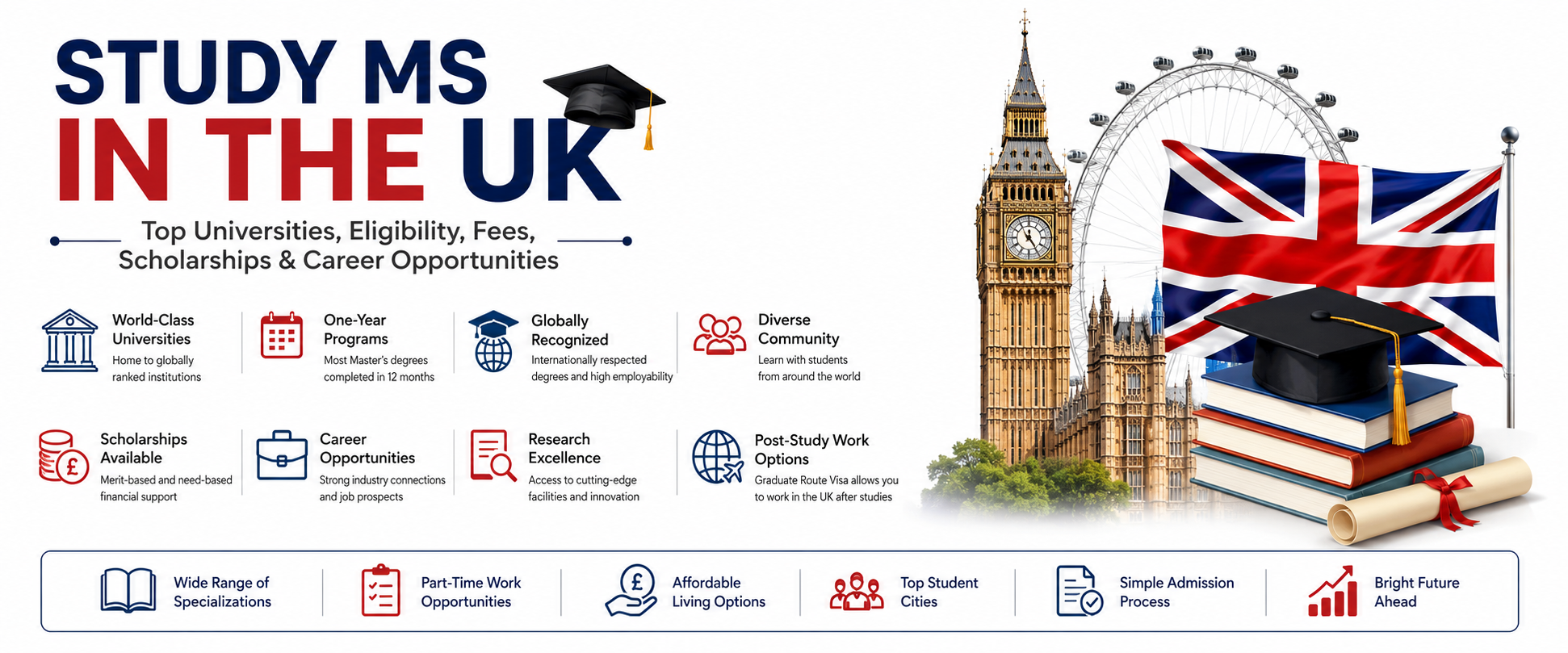
The United Kingdom is one of the world's most preferred destinations for postgraduate education. Every year, thousands of international students choose the UK because of its academic excellence, globally recognized degrees, research-driven education, and excellent career prospects.
One of the biggest advantages is the duration of the program. Most full-time MS programs are completed within one year, helping students save both time and money compared to countries where Master's degrees usually take two years. Students also benefit from internationally recognized qualifications, multicultural learning environments, and strong industry connections that improve employability.
The UK is also known for offering outstanding research facilities, innovative teaching methods, and excellent student support services. Graduates gain practical knowledge, critical thinking skills, and valuable international exposure that are highly valued by employers worldwide.
Benefits of Studying MS in the UK
Some of the major benefits include:
- One-year Master's programs
- World-class universities with global rankings
- Strong research and innovation culture
- Excellent industry collaborations
- Internationally recognized qualifications
- Scholarships and financial assistance
- Diverse student community
- High employability after graduation
- Opportunities for internships and work placements
- Post-study work opportunities through the Graduate Route
Best Student Cities in the UK
The UK offers several student-friendly cities that provide an excellent academic environment, modern infrastructure, and vibrant cultural experiences. According to QS Best Student Cities Rankings, cities like London, Edinburgh, Manchester, Birmingham, Glasgow, Bristol, Leeds, Sheffield, and Southampton continue to attract students from around the world because of their quality education and career opportunities.
Top Universities for MS in the UK
The UK is home to some of the world's leading universities known for academic excellence and research.
Some of the top universities include:
- University of Edinburgh
- University of Manchester
- King's College London
- University of Bristol
- University of Warwick
- University of Glasgow
- University of Southampton
- University of Birmingham
- University of Leeds
- University of Sheffield
- University of Nottingham
- Durham University
- University of St Andrews
- University of Exeter
- University of Sussex
- Queen Mary University of London
- University of Bath
- Newcastle University
- University of Liverpool
- Lancaster University
- University of York
- Cardiff University
- University of Reading
- Queen's University Belfast
- Cranfield University
- Loughborough University
Types of Postgraduate Qualifications
Students can choose different postgraduate qualifications depending on their academic goals.
These include:
- Taught Master's Degrees
- Research Master's Degrees
- Master of Philosophy (MPhil)
- Doctor of Philosophy (PhD)
Popular MS Specializations in the UK
UK universities offer a wide range of Master's specializations across different disciplines.
Popular choices include:
- Computer Science
- Artificial Intelligence
- Data Science
- Cyber Security
- Software Engineering
- Mechanical Engineering
- Civil Engineering
- Electrical Engineering
- Chemical Engineering
- Business Management
- Business Analytics
- Marketing
- Finance
- Accounting
- Human Resource Management
- Supply Chain Management
- Economics
- Public Health
- Pharmacy
- Nursing
- Medicine
- Environmental Science
- Renewable Energy
- Food Science
- Human Nutrition
- Statistics
- Astrophysics
- Psychology
- Forensic Psychology
- International Relations
- Law
- Social Work
- Real Estate
- Education
- Journalism
- Media and Communication
- Design
- Creative Arts
- Sports Therapy
- Microbiology
Duration of MS Courses
Most full-time MS programs in the UK are completed in one year. Research-based programs such as MRes may take between two and four years, while part-time Master's programs generally require around two years or more.
Many universities have rolling admissions, so students should apply early to improve their chances of admission.
Cost of Studying MS in the UK
The tuition fee depends on the university, specialization, and course type.
Average tuition fees are:
- Arts & Humanities: £9,000–£14,000
- Science: £9,500–£25,000
- Clinical Courses: £12,000–£33,000
- Business: £9,500–£20,000
- MBA: £19,500–£34,000+
Overall, international students can expect tuition fees ranging between £12,000 and £25,000 per year for most Master's programs.
Cost of Living in the UK
Students should also budget for their living expenses.
Typical monthly costs include:
- Accommodation: £400–£800 (shared), £700–£1,500+ (private)
- Utilities: £100–£150
- Food: £150–£250
- Transportation: £50–£100
- Study Materials: £50–£100
- Personal Expenses: £100–£200
Annual living expenses generally range between £11,000 and £15,000, depending on lifestyle and location.
Eligibility Criteria
Most universities require applicants to have:
- A Bachelor's degree in a relevant discipline
- Good academic performance (typically UK 2:2 or above)
- IELTS, TOEFL, PTE, or equivalent English language test scores (waivers may be available)
- Relevant academic background or work experience for certain programs
Documents Required
Students generally need to submit:
- Academic transcripts
- Degree certificate
- Updated CV or Resume
- Statement of Purpose (SOP)
- Two or Three Letters of Recommendation (LORs)
- English language proficiency scores
- Valid Passport
- Completed application form
- Application fee receipt (if applicable)
Admission Process
The admission process generally includes:
- Research universities and courses.
- Check eligibility requirements.
- Prepare all required documents.
- Submit the online application.
- Pay the application fee.
- Upload supporting documents.
- Track application status.
- Receive the admission offer.
- Accept the offer and complete enrollment.
Scholarships for International Students
Many UK universities, government bodies, charitable organizations, and private institutions offer scholarships for international students. Scholarships may be merit-based, need-based, or course-specific and can cover partial or full tuition fees. Some scholarships also contribute toward living expenses, making higher education more affordable.
Part-Time Work and Internships
International students are allowed to work:
- Up to 20 hours per week during academic sessions
- Up to 40 hours per week during university holidays
Many postgraduate programs also include internships, industrial placements, and practical projects that help students gain valuable work experience before graduation.
Career Opportunities After MS
An MS degree from a UK university provides excellent career opportunities across various industries.
Popular employment sectors include:
- Information Technology
- Artificial Intelligence
- Data Science
- Engineering
- Manufacturing
- Finance
- Banking
- Accounting
- Healthcare
- Pharmaceuticals
- Business Consulting
- Renewable Energy
- Environmental Science
- Education
- Research
Leading employers include Deloitte, PwC, EY, HSBC, Barclays, Rolls-Royce, AstraZeneca, GlaxoSmithKline, NHS, Google, Microsoft, and Amazon.
Graduates generally earn starting salaries ranging from £35,000 to £45,000 per year, with higher earning potential as they gain professional experience.
Post-Study Work Visa
International graduates can apply for the Graduate Route Visa, allowing them to remain in the UK after completing their studies to gain work experience. Students who secure skilled employment may later transition to the Skilled Worker Visa, opening pathways for long-term career growth in the UK.
Conclusion
An MS in the UK is an excellent investment for students seeking world-class education, global career opportunities, and international exposure. With prestigious universities, one-year Master's programs, industry-focused learning, generous scholarship opportunities, and strong graduate employability, the UK continues to be one of the most attractive destinations for postgraduate education. Careful planning, choosing the right university, and applying early can help students make the most of their study abroad journey.