





Introduction
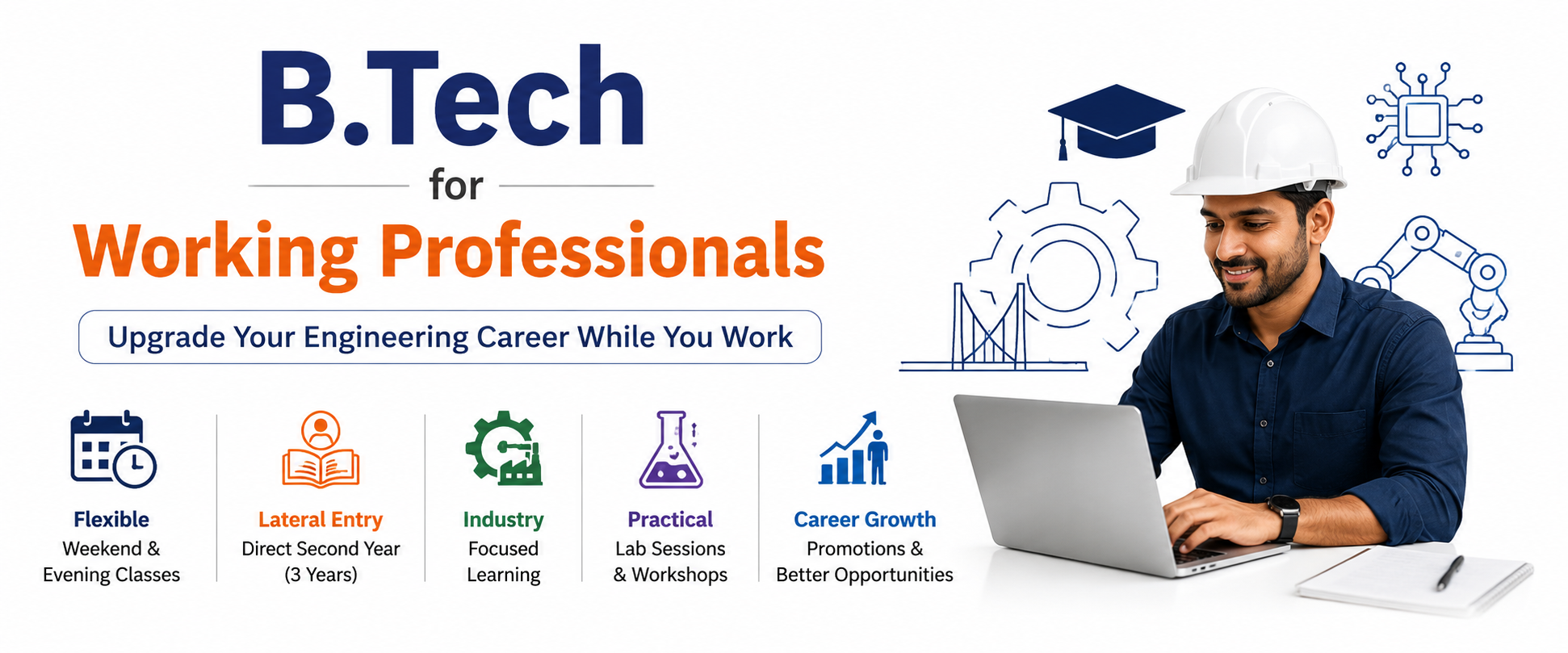
B.Tech for Working Professionals is a specially designed undergraduate engineering program that enables employed diploma holders and technical professionals to earn a bachelor's degree without interrupting their careers. Unlike traditional full-time engineering programs, this course follows a flexible learning model with evening, weekend, or hybrid classes, allowing students to balance their professional responsibilities with higher education.
The program is ideal for professionals working in industries such as manufacturing, construction, information technology, automation, electronics, civil engineering, mechanical engineering, and electrical engineering. It combines academic learning with real-world industrial exposure, enabling students to immediately apply classroom concepts to workplace challenges. This practical approach helps professionals enhance their technical knowledge while improving career prospects.
What is B.Tech for Working Professionals?
B.Tech for Working Professionals is a lateral entry engineering program generally completed in three years, allowing eligible candidates to gain direct admission into the second year of the engineering curriculum. The course is specifically developed for individuals who already possess technical qualifications and industry experience.
Unlike correspondence or distance education programs, this is a structured engineering degree that includes classroom instruction, practical laboratory sessions, workshops, projects, and semester examinations. The curriculum focuses on modern engineering practices, Industry 4.0 technologies, automation, robotics, digital manufacturing, and real-world problem-solving.
Flexible class schedules, including evenings, weekends, and hybrid learning modes, make it possible for working professionals to continue their employment while upgrading their qualifications.
Key Features of the Program
Some of the major highlights of B.Tech for Working Professionals include:
- Course Duration: Generally 3 years through lateral entry.
- Direct Second-Year Admission: Available for eligible diploma holders and other qualified candidates.
- Flexible Learning: Evening classes, weekend sessions, and hybrid learning options.
- Practical Training: Mandatory physical or phygital laboratory sessions and workshops.
- Industry-Oriented Curriculum: Covers advanced technologies and practical engineering applications.
- Work Integrated Learning: Allows professionals to combine workplace experience with academic learning.
- Recognized Degree: Offered by universities approved by the relevant regulatory authorities and following applicable AICTE guidelines for work-integrated and flexible learning programs.
Eligibility Criteria
Admission requirements may differ among institutions, but the general eligibility criteria include:
- Completion of a 3-year Diploma in Engineering or Technology from a recognized institution.
- Candidates with a B.Sc. degree with Mathematics or an equivalent technical qualification may also be eligible, depending on university norms.
- Minimum aggregate marks of 45% to 50% in the qualifying examination (varies by institution).
- Applicants should have at least one year of continuous full-time work experience, while some universities may require two to three years of relevant industry experience.
- Many institutions offer lateral entry admission into the second year based on academic qualifications and professional experience.
- Certain regional or state-affiliated institutions may require applicants to work within a specified distance from the campus, such as 75 km, in accordance with institutional policies.
Some universities may also conduct entrance tests, technical assessments, or personal interviews as part of the admission process.
Course Structure and Learning Mode
The curriculum is carefully designed to help working professionals manage both employment and education effectively.
The learning structure generally includes:
- Weekend or evening classroom sessions.
- Hybrid or blended learning using online and offline methods.
- Recorded lectures and digital learning resources.
- Practical laboratory sessions conducted on campus or at partner institutions.
- Assignments, projects, case studies, and industrial training.
- Semester-end examinations.
This flexible learning model allows students to continue their full-time jobs while completing their engineering degree.
Popular Specializations
Many universities offer a wide range of engineering specializations to match industry requirements, including:
- Mechanical Engineering
- Civil Engineering
- Electrical Engineering
- Electronics and Communication Engineering
- Computer Science and Engineering
- Information Technology
- Automobile Engineering
- Mining Engineering
Students should choose a specialization that aligns with their current profession and long-term career goals.
Benefits of Pursuing B.Tech While Working
One of the biggest advantages of this program is that professionals can continue earning while upgrading their qualifications.
Some key benefits include:
Earn While You Learn
Students continue receiving their regular salary without taking a career break, maintaining financial stability throughout the program.
Immediate Workplace Application
Engineering concepts learned during classes can be directly implemented in ongoing industrial projects, improving productivity and practical understanding.
Career Growth
A recognized engineering degree significantly improves eligibility for promotions, supervisory positions, managerial roles, and technical leadership opportunities in both private and public sector organizations.
Government Job Eligibility
Many government departments and public sector organizations require a recognized bachelor's degree in engineering for recruitment and promotions.
Professional Networking
Students interact with professionals from different industries, expanding their professional network and gaining exposure to diverse engineering practices.
Higher Education Opportunities
Graduates can pursue postgraduate programs such as M.Tech, MBA, or other specialized technical certifications after completing the degree, subject to the eligibility criteria of the respective institution.
Skills Developed During the Program
Apart from technical knowledge, students acquire several valuable professional skills, including:
- Advanced manufacturing techniques
- CNC machining
- 3D printing technologies
- Industrial automation
- Robotics and mechatronics
- Engineering software and simulation tools
- Digital technologies and data-driven decision-making
- Technical communication
- Leadership abilities
- Project management
- Time management
- Team collaboration
- Analytical and problem-solving skills
These competencies enhance employability and prepare professionals for future industry demands.
Career Opportunities
After completing B.Tech for Working Professionals, graduates can explore higher-level technical and managerial positions across multiple industries.
Popular job roles include:
- Senior Design Engineer
- Project Manager
- Automation Engineer
- Automation Specialist
- Operations Manager
- Production Engineer
- Technical Consultant
- Maintenance Engineer
- Quality Assurance Engineer
- Manufacturing Engineer
- Plant Supervisor
- Engineering Team Lead
The degree also strengthens prospects for internal promotions, salary increments, and career advancement in rapidly evolving engineering sectors.
Challenges and Success Tips
Balancing work and studies requires dedication and proper planning. Professionals can improve their chances of success by:
- Creating a consistent weekly study schedule.
- Attending all weekend and evening classes.
- Making use of recorded lectures and online learning materials.
- Completing assignments on time.
- Communicating with employers regarding examination schedules.
- Applying classroom concepts to real workplace projects for better understanding.
Accreditation and Recognition
Before enrolling, candidates should verify that the university is recognized by the University Grants Commission (UGC) and that the program complies with the applicable AICTE guidelines for work-integrated or flexible engineering education. Choosing a recognized institution ensures that the degree is accepted for employment, career progression, government opportunities (where applicable), and higher education, subject to prevailing regulations.
Conclusion
B.Tech for Working Professionals is an excellent option for employed technical professionals who wish to upgrade their qualifications without sacrificing their careers. With flexible learning schedules, practical training, industry-oriented curriculum, and recognized academic credentials, the program helps learners develop advanced engineering knowledge while gaining valuable workplace experience. Whether your goal is career advancement, promotion, higher education, or enhanced technical expertise, this program provides a practical pathway to long-term professional growth.