





Introduction
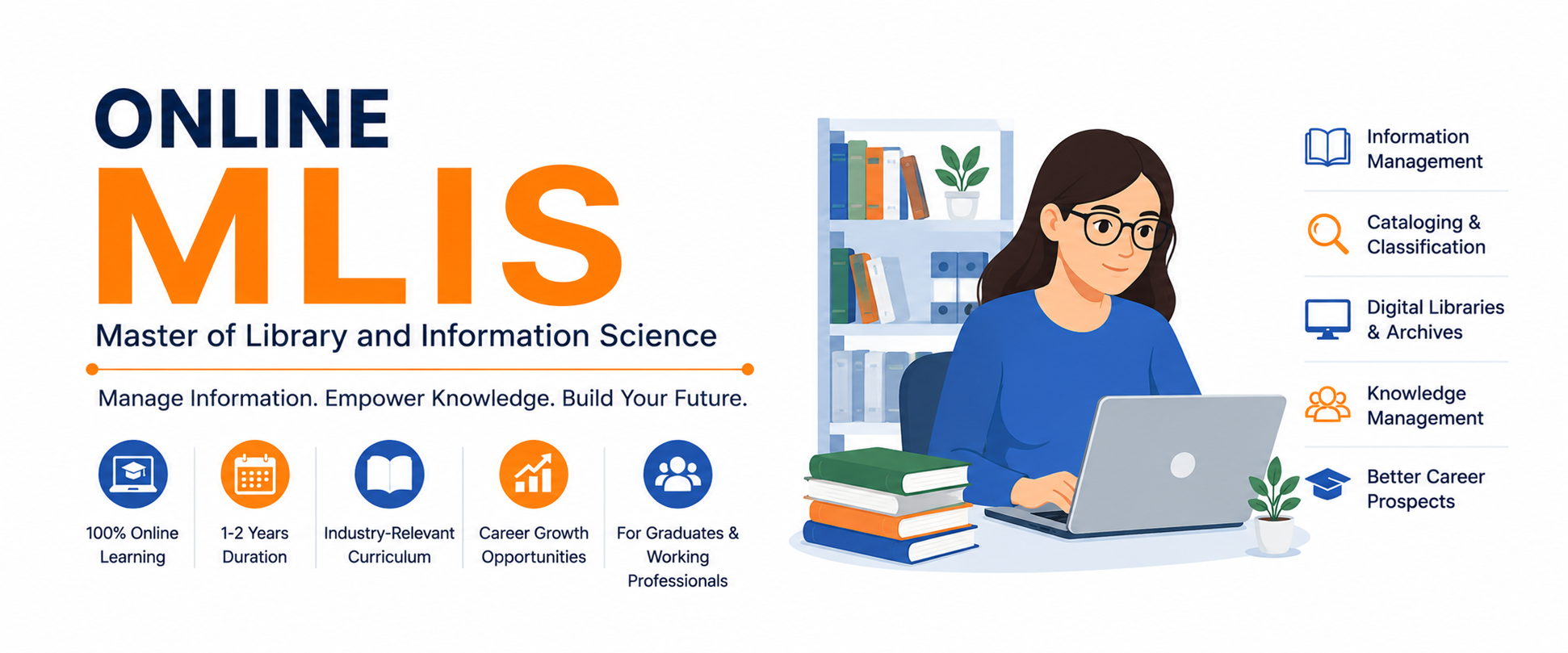
An Online Master of Library and Information Science (MLIS) is a postgraduate professional degree designed for individuals who want to build expertise in library science, information management, digital archiving, and knowledge organization. With the rapid growth of digital information and technology-driven knowledge management, the demand for qualified library and information professionals has increased significantly across educational institutions, research organizations, government departments, and corporate sectors.
The Online MLIS program combines the principles of traditional library science with modern information technology, enabling students to manage both physical and digital information resources efficiently. Delivered through virtual learning platforms, the course provides flexibility for working professionals and graduates who wish to continue their education without interrupting their careers.
What is an Online MLIS?
An Online Master of Library and Information Science (MLIS) is a postgraduate program that focuses on the organization, management, preservation, and dissemination of information in both digital and traditional formats. The program is generally completed within one to two years and equips students with the knowledge and practical skills required to manage libraries, digital repositories, archives, databases, and information systems.
Students learn through online classes, recorded lectures, virtual assignments, group discussions, and project work using a Learning Management System (LMS). The curriculum emphasizes information retrieval, cataloguing, classification, digital libraries, research methods, and the use of emerging technologies in library and information services.
An Online MLIS is an excellent choice for graduates who aspire to work in academic libraries, research institutions, public libraries, corporate knowledge centers, or digital information management environments.
Duration and Learning Format
The duration of an Online MLIS program generally ranges from one to two years, depending on the university and academic structure. The course is usually divided into two to four semesters.
The learning experience typically includes:
- Live virtual classes
- Recorded video lectures
- Digital study materials
- Learning Management System (LMS)
- Online assignments
- Virtual group projects
- Interactive discussion forums
- Online assessments
- Research-based projects
This flexible learning format allows students to balance education with work and personal responsibilities.
Eligibility Criteria
Eligibility requirements for an Online MLIS may vary slightly among universities.
Generally, applicants should have:
- A Bachelor of Library and Information Science (BLIS/B.Lib.I.Sc.) or an equivalent qualification from a recognized university.
- Some institutions may also accept graduates from related disciplines based on their admission policies.
- Minimum aggregate marks of approximately 45% to 50%, depending on the university.
- Required academic documents and valid identity proof.
Certain universities may conduct entrance examinations as part of the admission process, while many institutions offer admissions based on academic merit.
Admission Process
The admission process for an Online MLIS is generally conducted through an online application system.
The common steps include:
- Registering on the university admission portal.
- Completing the online application form.
- Uploading educational certificates and required documents.
- Paying the application or admission fee.
- Completing document verification.
- Receiving admission confirmation and access to the online learning platform.
Students should carefully review the admission requirements of their preferred institution before applying.
Subjects Covered in an Online MLIS
The Online MLIS curriculum is designed to provide comprehensive knowledge of library science, information management, and digital technologies.
Core subjects generally include:
- Information Retrieval Systems
- Cataloguing and Classification
- Library Management
- Information Organization
- Information Technology
- Digital Libraries
- Digital Archives
- Knowledge Management
- Research Methodology
- Database Management
- Information Literacy
- Library Automation
The curriculum helps students understand how to organize, preserve, retrieve, and distribute information effectively across both physical and digital environments.
Key Features of an Online MLIS
Modern Online MLIS programs offer a technology-driven learning experience that combines academic knowledge with practical applications.
Key features include:
- Flexible online learning
- Live and recorded lectures
- Digital learning resources
- Learning Management System access
- Virtual assignments and projects
- Faculty mentoring
- Online discussion forums
- Research-based learning
- Practical exposure to digital information systems
These features enable students to gain practical experience while learning at their own pace.
Why Choose an Online MLIS?
An Online MLIS offers numerous advantages for students and professionals seeking career growth in library and information science.
Flexible Learning
Students can access lectures, assignments, and learning resources from anywhere without attending regular campus classes, making the course ideal for working professionals.
Affordable Education
Online programs are generally more economical than conventional classroom courses. Students also save on travel, accommodation, and other campus-related expenses.
Industry-Relevant Curriculum
The curriculum integrates traditional library science with modern digital technologies, ensuring graduates are prepared for evolving information management practices.
Learn While Working
Professionals can continue their existing employment while upgrading their qualifications and expanding their career opportunities.
Skills Developed Through an Online MLIS
An Online MLIS equips students with essential professional and technical skills required in modern library and information environments.
Students develop expertise in:
- Information organization
- Cataloguing and classification
- Digital archiving
- Information retrieval
- Database management
- Knowledge management
- Research methodology
- Library administration
- Information technology applications
- Digital resource management
- Communication and user services
These competencies prepare graduates for diverse information management roles across multiple sectors.
Career Opportunities After an Online MLIS
Graduates with an Online MLIS can pursue rewarding careers in educational institutions, government organizations, corporate sectors, research centers, and digital information services.
Popular career options include:
- Librarian
- Assistant Librarian
- Information Scientist
- Digital Archivist
- Knowledge Manager
- Information Officer
- Library Manager
- Documentation Officer
- Records Manager
- Research Information Specialist
- Academic Information Professional
- Corporate Information Manager
The increasing use of digital information systems has created new employment opportunities beyond traditional library settings.
Career Scope of an Online MLIS
The demand for qualified information professionals continues to grow as organizations increasingly rely on efficient information management systems.
Online MLIS graduates are employed in:
- Schools
- Colleges
- Universities
- Public Libraries
- Research Organizations
- Government Departments
- Corporate Knowledge Centers
- Digital Libraries
- Museums
- Archives
- Documentation Centers
- Information Technology Organizations
Professionals with expertise in digital libraries, information systems, and knowledge management are highly valued across various industries.
Future Scope of Online MLIS
The growing digital transformation of libraries, educational institutions, and corporate organizations has significantly expanded the scope of library and information science. Modern professionals are expected to manage digital repositories, electronic resources, research databases, and organizational knowledge systems using advanced technologies.
As digital content continues to increase worldwide, skilled MLIS graduates will play an important role in organizing, preserving, and delivering information efficiently.
Conclusion
An Online MLIS is an excellent postgraduate program for graduates interested in library science, information management, digital archiving, and knowledge organization. The program combines traditional library practices with modern information technology, preparing students for careers in academic institutions, research organizations, government departments, corporate knowledge centers, and digital libraries. With flexible online learning, affordable education, industry-relevant curriculum, and strong career opportunities, an Online MLIS provides an ideal pathway for individuals seeking to become skilled information professionals in today's knowledge-driven world.